Blindfolded Dermatologists, a $2 Mortar, and a Lab Report: What Happened When Homemade Met High-End
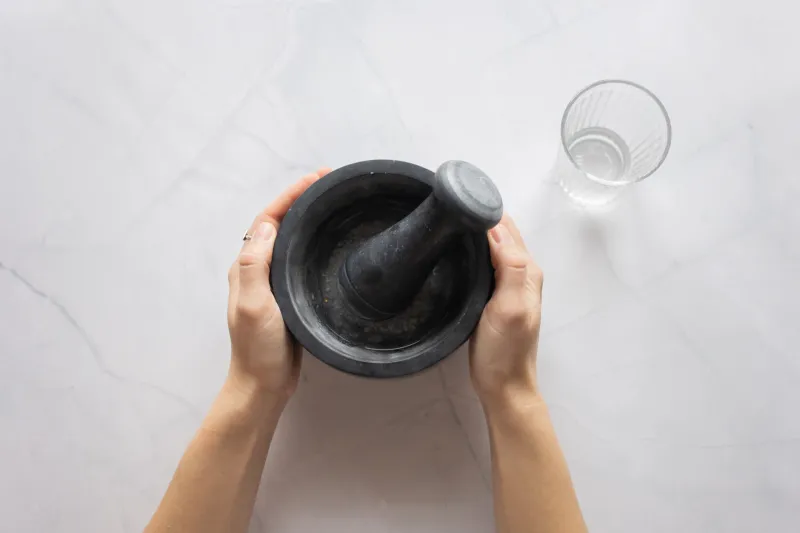
There's a moment of pure comedy in setting a $290 anti-aging serum next to a bowl of oatmeal you pulverized with a two-dollar mortar and pestle from a big-box store. But comedy was sort of the point. We wanted to know what, exactly, separates a hand-ground formula from a luxury one — and whether the difference is something your skin can detect, or something your wallet feels.
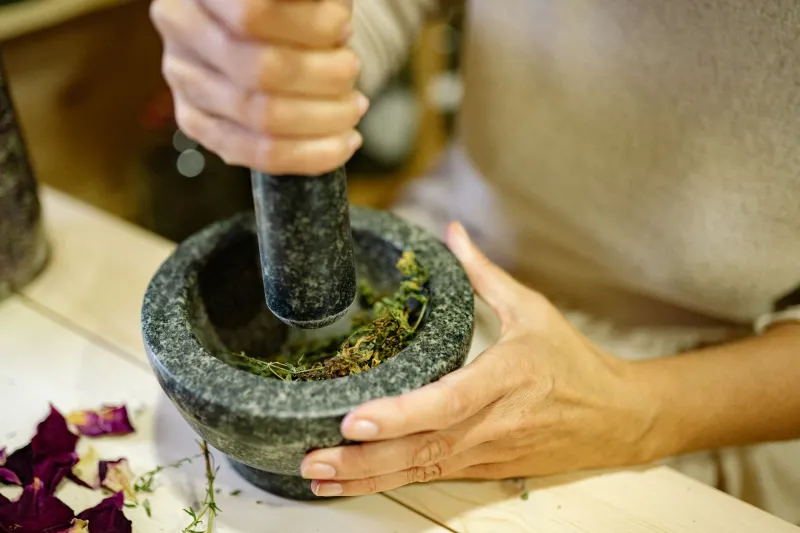
So we ran a little experiment. We made a basic soothing mask from colloidal oats, raw honey, and a pinch of turmeric, all ground by hand. We sent it — along with three store-bought products ranging from drugstore to department-store pricing — to an independent cosmetic testing lab. Then we asked two board-certified dermatologists to evaluate everything blind: no brands, no price tags, no back labels.
Here's how it went.
The Formulas, Stripped of Their Stories
The lab tested each sample for pH, viscosity, and microbial safety, then provided the dermatologists with standardized texture notes. The hand-ground mask clocked in at a perfectly skin-friendly pH of 5.1. Its viscosity was rustic — a little grainy, a little uneven. The luxury serum, predictably, was silky, stable, and immaculate.
That's the honest part: the store-bought products are better made. Emulsifiers, stabilizers, and preservatives exist for good reasons, and a kitchen operation can't replicate them. Both dermatologists flagged the homemade sample as something you'd use fresh, not something you'd keep in a steamy bathroom for six months.
What the Dermatologists Actually Said
Blind, one dermatologist described the mortar-ground mask as "surprisingly well-milled — the particle size is finer than I'd expect from a DIY product," and ranked it second overall for soothing potential, ahead of the drugstore option. The other called its ingredient list "genuinely sensible" but noted the shelf life problem immediately.
Neither guessed which sample cost $290. Both correctly guessed the luxury serum's actives — a vitamin C derivative and hyaluronic acid — were more sophisticated. But when asked which product they'd recommend to a patient with sensitive, irritation-prone skin, one of them picked the oat mask. "Simple, short ingredient decks win for reactive skin," she said. "You don't need forty ingredients. You need the right four."
So What Are You Paying For?
This is where the exercise gets interesting. The lab results suggest you're paying for three things when you buy a premium product: formulation stability, advanced actives, and packaging that keeps those actives from degrading. Those are real, and they matter — especially for clinical ingredients like retinoids and stabilized vitamin C.
But you're not paying for base ingredient quality, which is where the mortar-and-pestle approach quietly holds its own. A hand-ground oat, honey, or turmeric preparation delivers the same botanical benefit in your kitchen as it would in a jar. The science of why fresh-ground botanicals work — finer particles, intact phytochemistry, no long-shelf-life compromise — is the same whether the grinding happens in a lab or at your counter.
The Verdict We Didn't Expect
If we'd set out to prove that homemade beats high-end, we'd have failed. It doesn't, not across the board. But we also disproved the inverse. The dermatologists' blind rankings scattered across price points, and the two-dollar mortar earned genuine respect from people who spend their careers reading ingredient decks.
The takeaway isn't "throw away your serums." It's this: know what each tool is for. Use your mortar for fresh, simple, single-purpose botanicals — a weekly oat mask, a honey spot treatment. Use your bottles for the actives that genuinely need lab-grade stabilization. Your skin doesn't care about the price split. It cares about what's in the bowl.
And honestly? There's something to be said for a routine where one of the products cost less than your coffee.