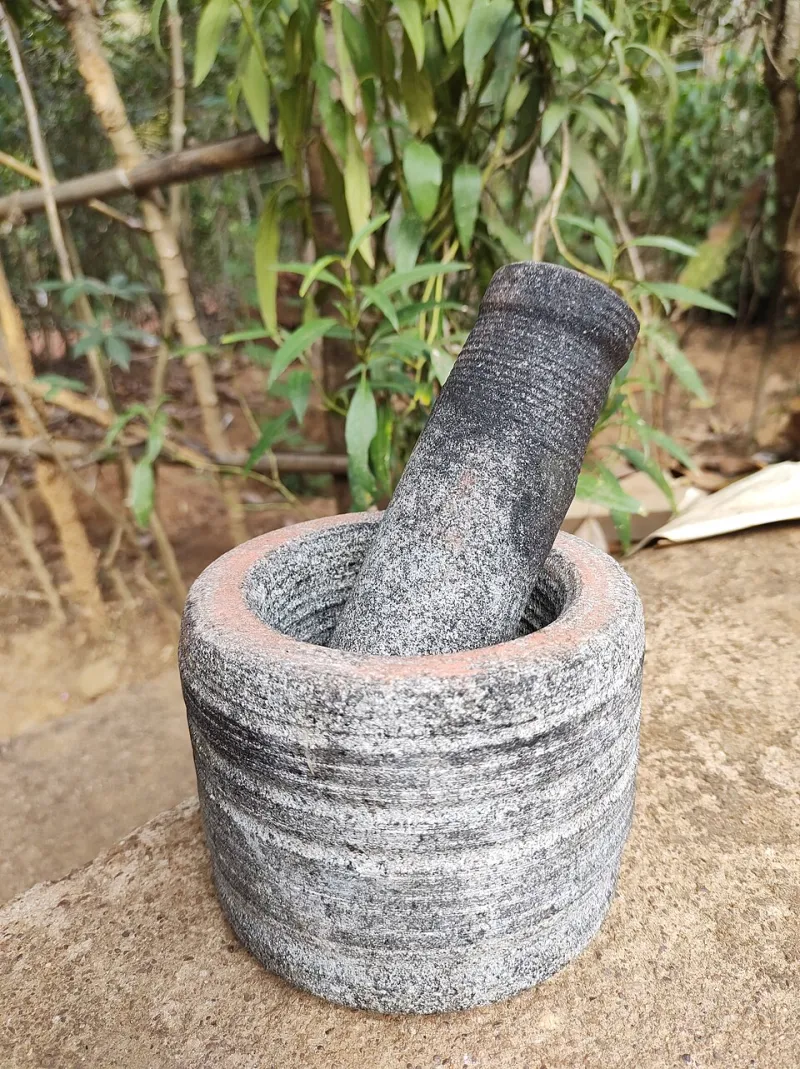
Why Making Your Own Skincare Feels So Good: The Neuroscience of Grinding, Smelling, and Slowing Down
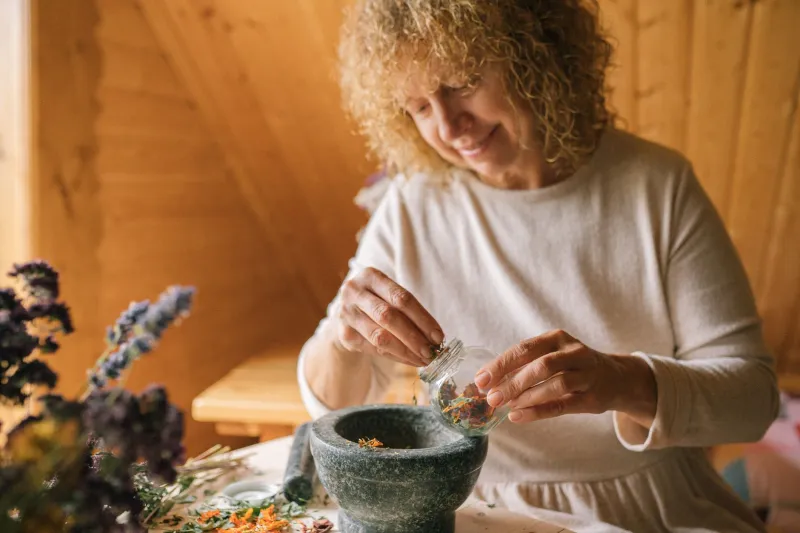
You've probably noticed it. That moment when you tip dried rose petals or a pinch of turmeric into a stone mortar, press the pestle down, and start working — something in your body just... exhales. Your shoulders drop. Your breathing slows. The noise in your head gets quieter.
That's not a coincidence, and it's not just vibes. There's real neuroscience behind why the ritual of hand-preparing your skincare hits differently than twisting open a jar from a shelf. And once you understand what's happening inside your nervous system during those five or ten minutes of grinding, you'll probably never want to skip it again.
Your Nervous System Has an Opinion About Your Skincare Routine
Dr. Tara Swart, a neuroscientist and author who has spoken extensively about sensory rituals and brain health, describes repetitive, intentional physical tasks as a reliable on-ramp to the parasympathetic nervous system — the branch responsible for rest, digestion, and cellular repair. In plain English: rhythmic, focused manual activity tells your body it's safe to stop bracing.
"The nervous system responds to rhythm and repetition," she's noted in interviews about mindfulness practices. "When you engage in a predictable, sensory-rich task with your hands, you're essentially giving your brain permission to downshift."
Grinding botanicals in a mortar checks every box. The circular motion is repetitive. The resistance from the stone is consistent. The sounds — that low, gravelly scrape of pestle against mortar — create what researchers call auditory anchoring, a grounding effect similar to white noise or ASMR that pulls attention away from anxious thought loops and into the present moment.
This matters for your skin more than you might think. Chronic stress elevates cortisol, which degrades collagen, disrupts your skin barrier, and triggers inflammation. The ritual that precedes application isn't separate from your skincare — it is skincare.
The Smell Is Doing More Work Than You Realize
Here's where things get genuinely fascinating. When you grind fresh botanicals — lavender, calendula, dried chamomile, green tea — you're not just releasing fragrance. You're releasing volatile organic compounds, the same aromatic molecules that aromatherapy has worked with for centuries. And those compounds don't just smell nice. They take a direct neurological shortcut.
Unlike every other sense, smell bypasses the thalamus — the brain's relay station — and connects directly to the limbic system, which governs emotion and memory. It's why a single whiff of something can transport you back to your grandmother's kitchen or a summer vacation from years ago.
When you grind turmeric and the earthy, slightly peppery scent rises up, your brain is receiving a signal that travels faster and more directly than almost any other input. Researchers studying aromatherapy have documented measurable reductions in cortisol and increases in serotonin from inhalation of specific botanical compounds. Lavender's linalool has been studied extensively for its anxiolytic (anti-anxiety) effects. The eugenol in clove has demonstrated calming properties in multiple clinical contexts.
You're not just making a face mask. You're essentially doing a guided meditation with chemistry.
Tactile Feedback and the Skin-Brain Connection
There's another layer here that wellness researchers are increasingly paying attention to: the skin-brain axis. Your skin is your largest organ and it is, quite literally, made from the same embryonic tissue as your nervous system. The two are in constant conversation.
The pressure and resistance you feel when grinding — the way the pestle pushes back against your palm, the subtle vibration that moves up through your wrist — activates mechanoreceptors in your hands. These are the sensory nerve endings that respond to touch, pressure, and texture. When stimulated in a slow, deliberate way, mechanoreceptors send signals that promote the release of oxytocin, sometimes called the bonding hormone, which is also associated with reduced anxiety and increased feelings of wellbeing.
Wellness therapist and somatic practitioner Maya Stein (who works with clients on embodiment practices in New York) describes it this way: "So many of us are disconnected from our hands. We type, we scroll, we tap — but we rarely use our hands to make something with resistance and intention. That kind of tactile engagement is deeply regulating for the nervous system."
This is also, not incidentally, why people who cook from scratch often describe it as therapeutic. The kneading, the chopping, the stirring — it's not just culinary. It's somatic.
Why You Actually Stick With Rituals You Build Yourself
Here's the behavioral science piece that beauty brands rarely talk about: skincare adherence — actually using your products consistently — is dramatically higher when the routine involves some form of active participation.
A 2019 study published in the Journal of Consumer Psychology found that people valued products more highly and used them more consistently when they had a hand in their preparation or customization. The researchers called it the "IKEA effect" of personal care: the effort you invest creates psychological ownership, and psychological ownership creates commitment.
When you grind your own face mask, you've spent time on it. You've chosen the ingredients. You've smelled them, felt them, watched the texture change under your pestle. You have, in a very real sense, made something. That investment doesn't evaporate when you set the mortar down — it follows you into application, into the way you massage the preparation into your skin, into how likely you are to show up again tomorrow.
Compare that to the grab-and-go serum that lives in your medicine cabinet, half-forgotten behind the toothpaste. Convenience has its place. But convenience doesn't build ritual, and ritual is what actually changes behavior long-term.
The Sensory Stack: What You're Building Every Time You Grind
Think of a hand-grinding session as a layered sensory experience that your body learns to associate with safety, care, and calm:
- Sound: The rhythmic scrape of stone activates auditory anchoring
- Smell: Freshly released botanical compounds engage the limbic system directly
- Touch: Resistance and pressure stimulate mechanoreceptors and oxytocin release
- Sight: Watching color and texture transform is visually engaging in a way that keeps the mind present
- Intention: The deliberate choice of ingredients adds a cognitive layer of self-care agency
Stack all of that together and you're not just making a face mask. You're running a full-body nervous system reset before you've even touched your face.
Ancient Cultures Understood the Assignment
Women in ancient Egypt, India, Japan, and across sub-Saharan Africa didn't just grind their botanicals because they lacked a Vitamix. The preparation ritual was considered inseparable from the treatment itself. In Ayurvedic tradition, the state of mind of the person preparing a remedy was thought to influence its efficacy — a concept that sounds mystical until you consider that stress hormones absorbed through handling can affect volatile compound stability in fresh botanicals.
Modern neuroscience is essentially writing peer-reviewed footnotes to what those traditions already practiced.
Slow Down to Show Up
We're not suggesting you grind every product from scratch every morning — life is busy and balance is real. But even a few minutes, a few times a week, of deliberate, sensory-rich preparation can shift the entire quality of your relationship with your skin.
The pestle and mortar sitting on your counter isn't just a tool. It's an invitation to stop, feel something real in your hands, breathe in something that grew from the earth, and remind your nervous system that you are, in fact, worth the slowdown.
Your skin will notice. But honestly? So will everything else.