Size Matters More Than You Think: The Particle Science Behind Truly Effective Skincare

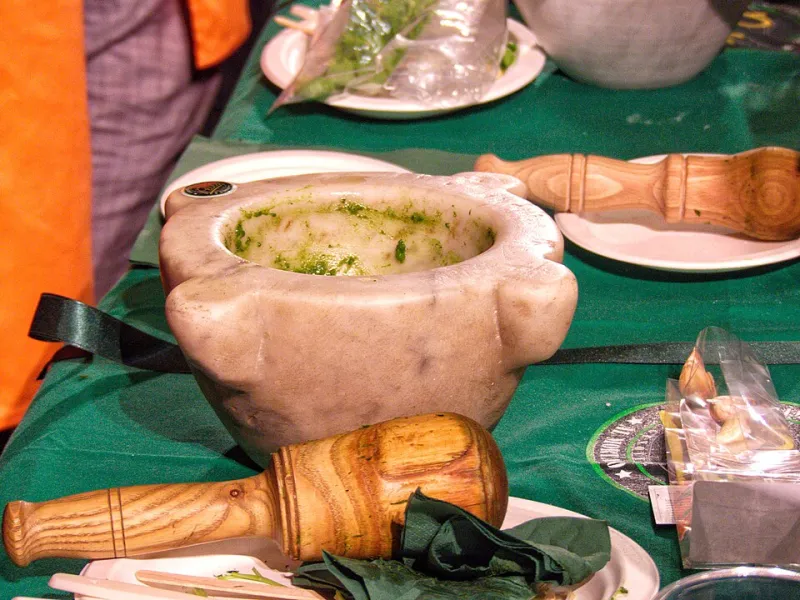
Photo: Tom Knapp, CC BY-SA 2.0, via Wikimedia Commons
There's a conversation happening in cosmetic chemistry labs that hasn't quite made it to your bathroom shelf yet. It doesn't involve a flashy new molecule or a celebrity-backed serum. It's about something far more fundamental — how small a particle needs to be before your skin will actually let it in.
If you've ever wondered why two products with nearly identical ingredient lists can perform so differently, particle size is often the answer nobody's giving you.
Your Skin Is a Bouncer, Not a Welcome Mat
The outermost layer of your skin — the stratum corneum — is remarkably good at keeping things out. That's its whole job. It's a tightly packed matrix of flattened dead cells and lipids, and it doesn't just wave things through. For an active ingredient to do anything meaningful, it has to either slip between those cells or find a route through the hair follicles and sweat glands that dot your skin's surface.
Here's where particle size becomes everything. Research in transdermal delivery consistently points to a threshold: particles larger than roughly 500 nanometers have a hard time crossing the stratum corneum passively. Drop below that — into the 100 to 400 nanometer range — and penetration improves significantly. Go smaller still, and you're entering territory where ingredients can reach living skin cells, not just sit on the surface layer.
Cosmetic chemists call this the "bioavailability window," and it's one of the most underappreciated concepts in everyday skincare.
What Commercial Processing Actually Does to Your Botanicals
Most powdered botanical ingredients sold in bulk — think turmeric, rice bran, green tea extract — go through industrial milling or spray drying. These processes are efficient and consistent, which is exactly what large-scale manufacturing needs. But efficiency and optimal particle size aren't always the same thing.
Industrial milling typically produces particles in a wide and irregular range. You might get some particles at 200 microns and others at 20 microns in the same batch, with no real control over which actives end up in which size fraction. That inconsistency matters because the beneficial phytochemicals in a plant — the polyphenols, flavonoids, volatile oils — aren't distributed evenly across particle sizes. Some of the most bioactive compounds are concentrated in the cellular structures that only break down under specific, controlled grinding conditions.
Spray drying adds another layer of complexity. The high heat involved can degrade heat-sensitive compounds before they ever touch your skin. You're left with a powder that technically contains the ingredient but may have lost a meaningful portion of what made that ingredient worth using in the first place.
The Stone Difference: Slow Grinding, Smarter Particles
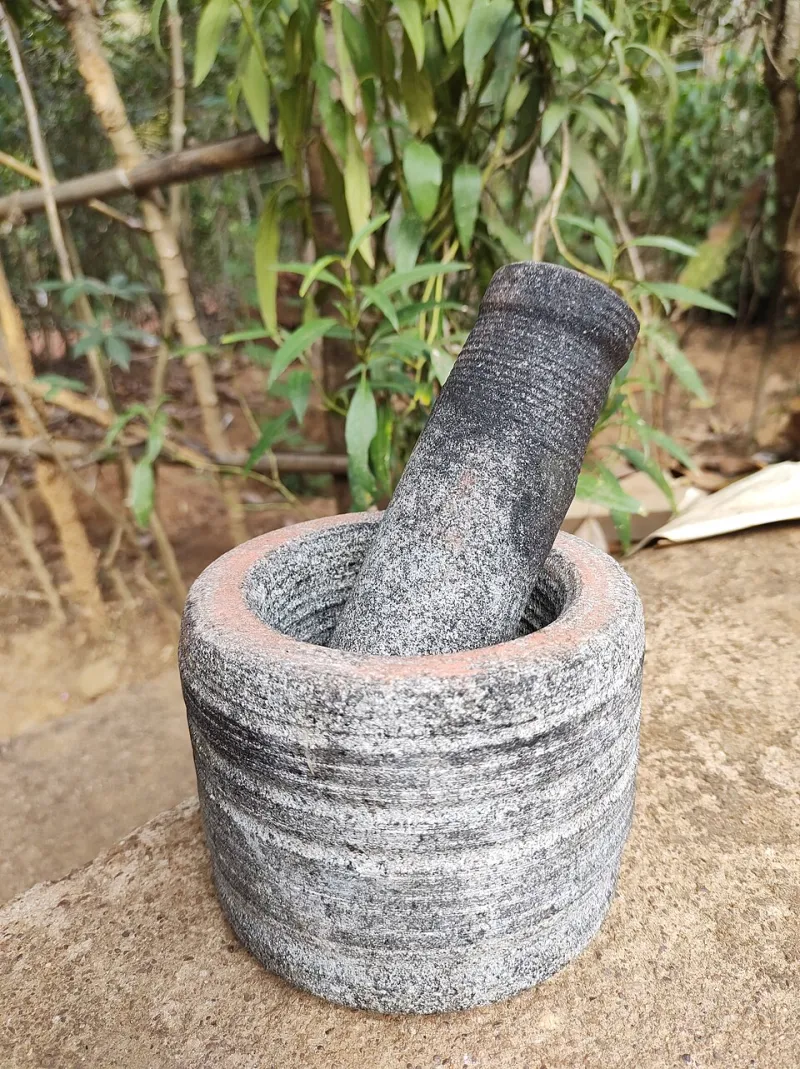
This is where traditional preparation methods turn out to be quietly ahead of the curve. Stone grinding — the kind that's been used in Ayurvedic preparation, East Asian herbalism, and North African beauty rituals for centuries — operates on entirely different principles than industrial milling.
The pressure applied by stone on stone is gradual and consistent. Rather than slicing or shearing plant material the way a blade mill does, stone grinding crushes cell walls progressively, releasing oils and active compounds at lower temperatures. The friction generates minimal heat, which means volatile compounds stay intact. And because the process is slower, you end up with a more uniform particle distribution — one that tends to cluster in that bioavailability-friendly range.
Cosmetic chemists who've studied traditionally prepared pastes — like the ubtan blends used in South Asian bridal rituals or the rhassoul clay preparations from Morocco — have noted that stone-ground versions of these formulas consistently show finer, more homogeneous particle profiles than their commercially milled counterparts. That's not coincidence. It's physics working in favor of your skin.
The Numbers Behind the Glow
Let's get a little specific, because the numbers are genuinely interesting. Studies on curcumin — the active compound in turmeric — show that reducing particle size from around 22 microns to under 5 microns can increase skin absorption by a factor of several times over. For niacinamide, a staple in brightening formulas, finer particle sizes correlate with faster delivery to the epidermis. Even something as familiar as oat flour behaves differently depending on how finely it's been milled: ultra-fine oat particles penetrate the follicular pathway more effectively, while coarser versions mostly sit on the skin's surface.
None of this means bigger particles are useless — surface-level ingredients have their place in forming protective barriers and providing texture. But if you're using a botanical active because you want it to actually change something in your skin, particle size is the variable that determines whether that happens.
What This Means for How You Choose Products
The honest answer is that most product labels won't tell you the particle size of their ingredients. It's not a regulated disclosure in the US, and most brands don't test for it. But there are some signals worth paying attention to.
Texture is one. A stone-ground botanical paste or powder tends to feel smoother and more cohesive than a commercially milled equivalent, even when they look similar in color. If a turmeric powder feels slightly gritty or uneven, that's a clue about what's happening at the particle level. A well-ground preparation should almost feel silky between your fingers.
Heat exposure during processing is another. Anything that's been spray dried or processed at high temperatures has likely lost some of its more delicate actives, regardless of particle size. Cold-processed and stone-ground preparations preserve more of the original phytochemical profile.
And then there's the question of freshness. Particle size degrades over time — finely milled particles can reaggregate, essentially clumping back together and losing their penetration advantage. Smaller-batch, freshly prepared botanicals maintain their particle integrity better than ingredients that have been sitting in a warehouse for months.
The Takeaway Your Dermatologist Probably Skipped
Dermatologists are extraordinary at diagnosing conditions and recommending treatment categories. But the granular (pun intended) details of ingredient processing rarely come up in a fifteen-minute office visit. That's not a criticism — it's just a gap worth filling yourself.
The next time you're evaluating a botanical skincare product, think beyond the ingredient list. Ask how those ingredients were prepared. Ask whether the formulation was processed at low temperatures. Ask whether the brand can speak to particle size or bioavailability.
Because here's the thing: ancient grinding traditions weren't just cultural habit. They were, in many cases, an intuitive optimization of exactly the physics that modern cosmetic science is now validating. The pestle meeting the mortar, the slow pressure, the careful reduction of plant material — that process was producing particles your skin could actually use long before anyone had the equipment to measure why.
The science caught up. The question is whether the products on your shelf have.