Why Your Skin Gets Stronger When You Work for It: The Science of Grinding Resistance

Photo by Photo by Katherine Hanlon on Unsplash on Unsplash
The Shortcut That Skipped Something Important
We live in an era of effortless skincare. Pumps, droppers, pre-mixed serums, foil-sealed single-use pods — the whole industry has been sprinting toward the path of least resistance for decades. And look, convenience isn't the enemy. But somewhere in that race to frictionless beauty, we may have left behind something genuinely valuable: the resistance itself.
Not resistance in the motivational-poster sense. Actual, physical, biomechanical resistance. The kind your great-grandmother encountered every morning when she pressed dried botanicals into stone and worked them until something useful came out. That resistance — the push and pull, the pressure and release — turns out to matter a lot more than modern skincare marketing wants to admit.
What Mechanotransduction Actually Means for Your Skin
Here's a term you're going to be hearing a lot more: mechanotransduction. It sounds like something from a physics textbook, but it's actually one of the more fascinating frontiers in dermatological research right now. At its core, mechanotransduction is the process by which your skin cells convert physical forces — pressure, tension, friction — into biochemical signals that change how those cells behave.
Your skin isn't passive. It doesn't just sit there absorbing whatever you put on it. It responds to touch, to pressure, to the mechanical environment around it. When you apply controlled physical stress to skin tissue, cells begin communicating differently. Collagen synthesis can be upregulated. Barrier proteins reorganize. Inflammatory responses modulate. The skin, essentially, adapts.
This is the same principle behind why controlled exercise builds muscle, or why physical therapy uses resistance to retrain injured tissue. Stress, applied correctly and consistently, doesn't weaken biological systems — it strengthens them.
The Pestle as a Skincare Tool, Not Just a Preparation Device
Now think about what happens during the hand-grinding process. You're not just crushing botanicals. You're creating a dynamic physical interaction — variable pressure, directional friction, rhythmic repetition. The person doing the grinding is applying force, meeting resistance, adjusting, and repeating. That's not incidental. That's a biomechanical dialogue.
When the resulting preparation is applied to skin — often with the same hands that did the grinding, using similar deliberate strokes — the mechanical element doesn't stop. Traditional application methods in Ayurvedic, West African, and East Asian beauty practices weren't just about getting product onto skin. They involved specific pressure, specific direction, specific duration. The ritual was the delivery mechanism.
Modern research on facial massage and topical absorption is starting to validate this. Studies on lymphatic drainage and increased product penetration through manual application suggest that how you put something on your skin is nearly as important as what you're putting on it. Ancient practitioners didn't have peer-reviewed journals, but they clearly figured this out through observation and iteration over centuries.
Controlled Stress vs. Chronic Stress: A Critical Distinction
Before anyone spirals into thinking they need to aggressively scrub their face into resilience — let's be clear about something. There's a massive difference between controlled, intentional mechanical stress and chronic, repeated irritation. The former builds barrier function. The latter destroys it.
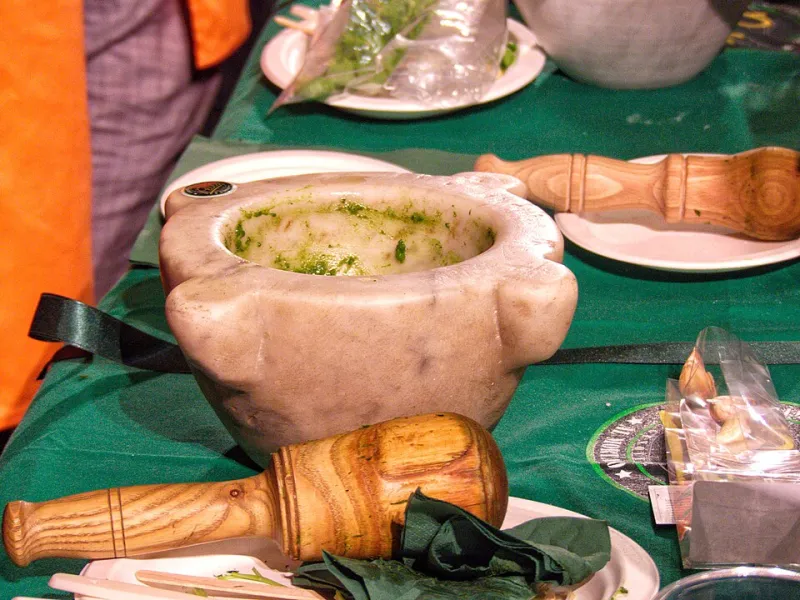
The grinding ritual model is inherently calibrated. You're not attacking your botanicals; you're working with them. The resistance you encounter when crushing dried chamomile or turmeric root into a stone mortar gives you real-time feedback. Too much force and you overheat the compounds. Too little and you don't release the phytochemicals you're after. The process teaches restraint through the material itself.
That same principle applies at the skin level. The goal isn't aggressive stimulation. It's intentional engagement — enough physical input to activate the skin's adaptive response, not enough to trigger defensive inflammation. Traditional preparation and application methods tend to land in this sweet spot naturally, because they were developed over generations of trial and error on actual human skin.
What the Modern Industry Got Wrong About "Gentle"
The obsession with "gentle" in contemporary skincare is understandable. Decades of over-exfoliation, harsh actives, and stripping cleansers left a lot of compromised skin barriers in their wake. The correction toward gentler formulations was necessary and largely good.
But somewhere along the way, "gentle" got conflated with "zero input." The ideal skincare routine became something you barely feel — a weightless serum that disappears instantly, a moisturizer that absorbs in seconds, an application process that requires almost no effort at all. Passive. Effortless. Frictionless.
The problem is that skin may actually need some input to respond optimally. Not pain. Not irritation. But engagement. The mechanotransduction research suggests that completely passive application might be leaving adaptive benefits on the table — benefits that traditional, hands-on beauty rituals were capturing without ever knowing the scientific terminology for what they were doing.
Building Your Own Resistance Practice
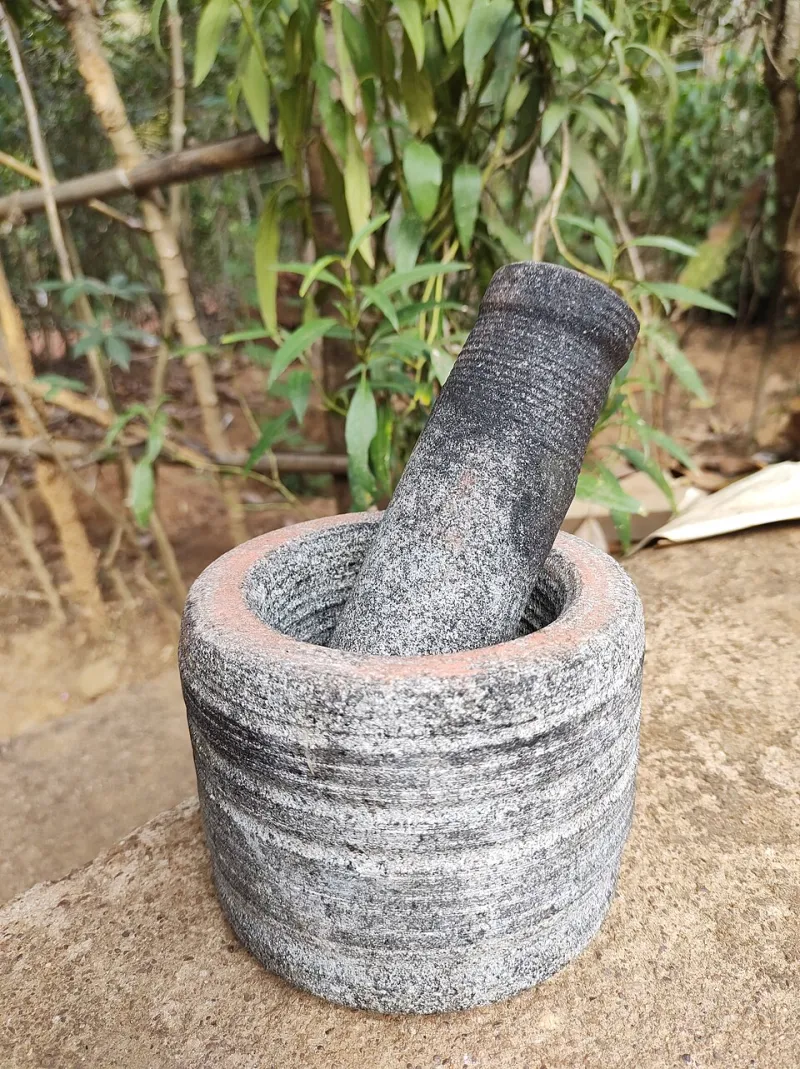
You don't need to source a granite mortar and spend forty minutes grinding every morning (though honestly, if that sounds appealing, we're not going to stop you). But there are practical ways to bring the principle of intentional resistance back into your routine.
Start with your application technique. Instead of patting serum on and moving on, take sixty extra seconds to work it in with deliberate upward pressure along the jawline, gentle circular motion at the temples, and slow, firm strokes from the center of the face outward. You're not massaging aggressively — you're creating enough mechanical input to signal your skin cells that something is happening and they should respond accordingly.
If you're working with a clay mask or a ground botanical preparation, consider the mixing process part of the ritual. The resistance you feel when incorporating water into dry ingredients, the texture changing under your hands — that's not just prep work. It's the beginning of an interaction that continues when the product meets your skin.
And if you're ever tempted to dismiss this as overthinking a beauty routine, remember that your ancestors built entire cultural traditions around these physical acts. They weren't being inefficient. They were being thorough in ways we're only now developing the scientific vocabulary to describe.
Resistance Is the Point
The modern skincare industry has optimized hard for ease. That's not inherently wrong — accessibility matters, and not everyone has the time or ability for elaborate preparation rituals. But ease shouldn't come at the cost of efficacy, and the emerging science of mechanotransduction is raising real questions about whether frictionless beauty is actually serving our skin as well as we think.
Your skin is an adaptive organ. It responds to its environment, to the inputs it receives, to the physical forces it encounters. Giving it nothing to respond to isn't the same as protecting it. Sometimes the most sophisticated thing you can do for your skin is exactly what your ancestors did: meet it with intention, apply some pressure, and let the resistance do its work.