Fresh-Ground Face Masks: Why Your Skin Notices the Difference Immediately
Photo: Saankav, CC BY-SA 4.0, via Wikimedia Commons
There's a moment — maybe you've had it — where you open a jar of powder face mask, sniff it, and feel vaguely underwhelmed. It smells fine. It looks fine. But something's flat about it, like a song played at the wrong speed. That flatness isn't in your head. It's chemistry.
When botanical ingredients get ground in advance, packaged, shipped across the country, and stored under your bathroom sink for three months, they lose something measurable. Volatile organic compounds — the aromatic, bioactive molecules responsible for a lot of what makes plant-based skincare actually work — begin evaporating the moment cell walls are broken. What's left in that premixed powder is a shadow of what the whole ingredient once was.
Grinding fresh changes the equation entirely.
What Happens the Second You Break Open a Plant Cell
Plant cells are essentially tiny locked vaults. Inside them sit enzymes, antioxidants, essential fatty acids, and volatile compounds that exist in a kind of suspended stability — protected by cell walls that keep oxygen and light at bay. The moment you grind, crush, or break those walls, you trigger a cascade of chemical activity.
Some of that activity is exactly what you want. Enzymatic reactions release bound polyphenols. Phytochemicals become more bioavailable. Aromatic compounds volatilize — which is part of why freshly ground turmeric smells so aggressively alive compared to a year-old jar of the stuff.
But oxidation also begins immediately. Which means the window between grinding and applying is where the real potency lives. Pre-ground products have already been through that window and out the other side.
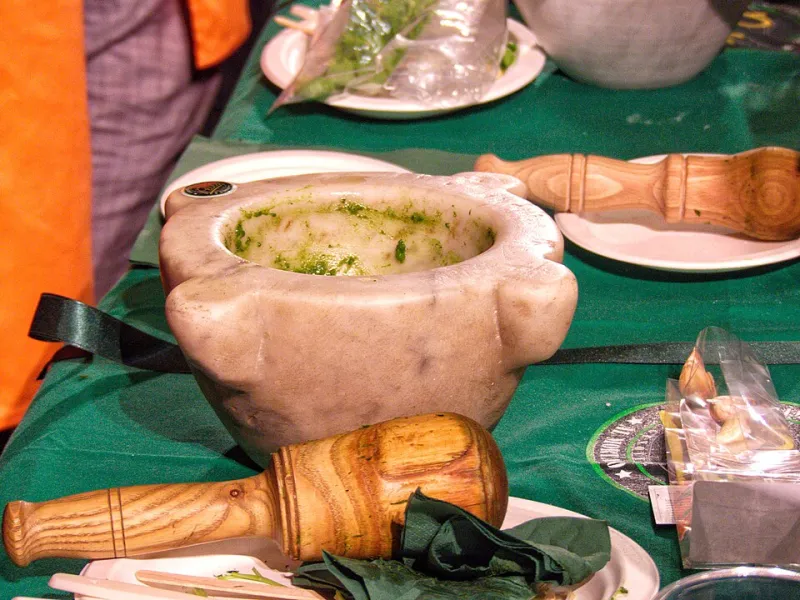
Particle size matters too. Freshly ground botanicals, especially when worked through a mortar and pestle with intention, produce irregular, jagged particles that interact with skin differently than the uniform, processed particles in commercial powders. Those irregular edges create more surface area contact with the skin. More contact means more opportunity for active compounds to actually reach the stratum corneum — the outermost layer of skin where absorption begins.
The Oxidation Problem Nobody Talks About at the Beauty Counter
Here's a number worth sitting with: studies on ground spices suggest that volatile compound concentration can drop by 30–50% within the first few weeks of grinding, depending on storage conditions. Most commercial mask powders have been ground months before you ever open them.
This isn't a knock on every pre-made formula — some use encapsulation technology or nitrogen flushing to slow oxidation. But those are industrial solutions to a problem that simply doesn't exist when you grind your ingredients five minutes before you use them.
Freshly broken plant cells also deliver enzymes that haven't been denatured by heat processing. Many commercial powder formulas are milled at high speeds, generating heat that can compromise heat-sensitive compounds like vitamin C precursors in rosehip or the sulfurous compounds in turmeric that contribute to its anti-inflammatory activity.
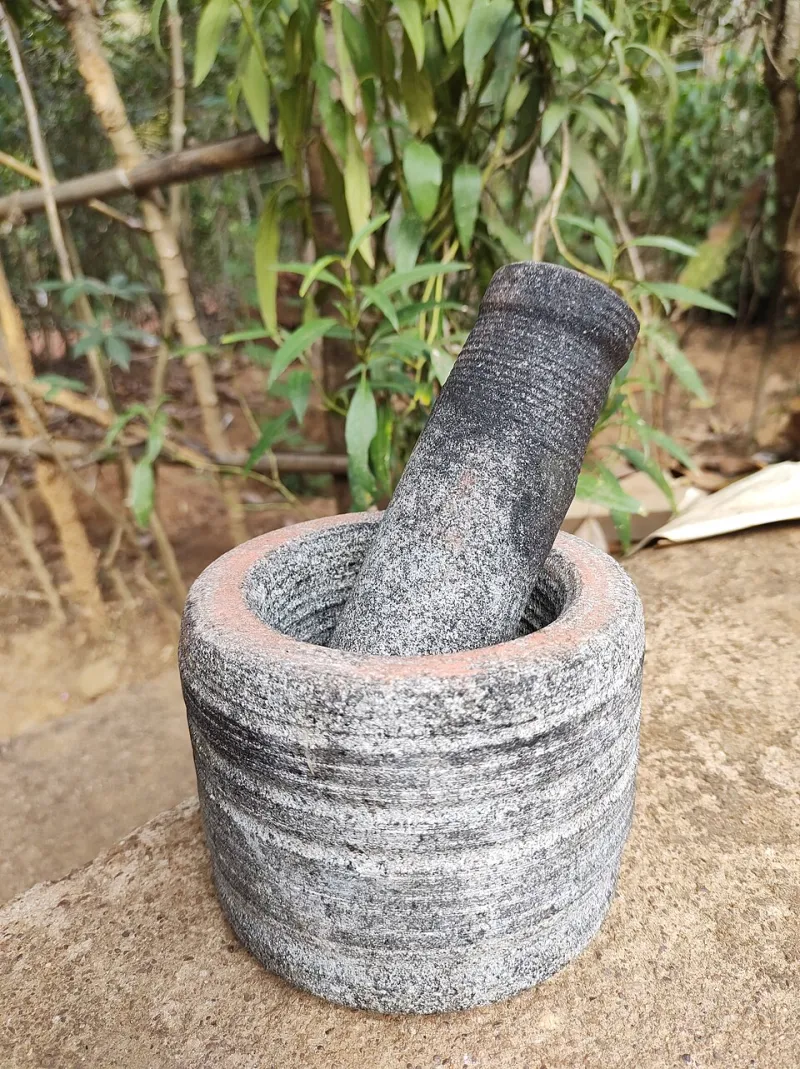
Your mortar and pestle generates minimal heat. It works slowly, mechanically, the way humans have been processing botanicals for thousands of years — which, it turns out, is actually quite good for preserving what makes those botanicals useful.
Three Fresh-Ground Masks Worth Making Tonight
These recipes are designed to be made in small batches, applied immediately, and adjusted based on what your skin is doing right now — not what a formula decided it might be doing in general.
1. The Brightening Mask (For Dullness and Uneven Tone)
Ingredients:
- 1 tsp dried rose petals
- ½ tsp turmeric root (dried)
- ½ tsp raw chickpea flour
- Enough plain yogurt to form a paste
How to grind: Start with the rose petals — they're delicate and will powder quickly. Add the turmeric and work it in using circular pressure. Add chickpea flour last and grind until the mixture is a fine, relatively even powder. Mix in yogurt fresh.
Why it works: Turmeric's curcumin is a well-documented antioxidant with documented anti-inflammatory properties. Rose petals contain tannins and mild astringents that can help even skin texture. The lactic acid in yogurt provides gentle chemical exfoliation while the chickpea flour physically buffs. Grinding the dry ingredients together activates surface compounds that bind more readily to the yogurt's fat content, improving how well the actives adhere to skin.
2. The Calming Mask (For Redness and Sensitivity)
Ingredients:
- 1 tsp dried chamomile flowers
- ½ tsp colloidal oats (or whole rolled oats, ground fine)
- ¼ tsp dried lavender
- Enough aloe vera gel to form a paste
How to grind: Chamomile first — the flower heads release their aromatic compounds quickly and you'll notice the scent intensify as you grind. Add lavender and work until integrated. Add the oats last; they need more pressure and will thicken the blend. Combine with aloe immediately before applying.
Why it works: Chamomile's bisabolol and apigenin are among the most studied botanical anti-inflammatories in skincare. Freshly ground chamomile releases these compounds far more efficiently than powders that have had weeks to oxidize. Oats contain avenanthramides — compounds with strong anti-itch and barrier-supporting properties — that are best accessed when the oat cell wall is freshly broken. Aloe's polysaccharides help carry these actives toward the skin surface.
3. The Clarifying Mask (For Congestion and Excess Oil)
Ingredients:
- 1 tsp dried neem leaf
- ½ tsp dried holy basil (tulsi)
- 1 tsp kaolin clay
- Enough raw honey to form a paste
How to grind: Neem is the toughest ingredient here — work it with firm, sustained pressure before adding the tulsi. Once both are fine, add the clay and grind briefly to integrate. The honey goes in last, right before application.
Why it works: Neem contains nimbidin and nimbin — compounds with documented antibacterial and sebum-regulating properties. Holy basil contributes ursolic acid, which research has linked to reduced bacterial activity on skin. Grinding these together creates a combined particle that delivers both actives simultaneously. Kaolin absorbs excess oil without stripping, and raw honey's natural hydrogen peroxide content adds mild antimicrobial support. The moment you grind these botanicals, you're releasing compounds that would have been sitting dormant in a sealed powder packet.
A Few Practical Notes Before You Start
Grinding fresh takes about five extra minutes. That's the real trade-off, and it's worth being honest about. But those five minutes are also when you're smelling what you're about to put on your face, noticing the texture change as ingredients break down, and making small adjustments based on what your skin needs today versus last Tuesday.
That kind of attentiveness is something no premixed formula can replicate — and it's something your skin tends to respond to in kind.
Store any leftover dry ingredients whole, not pre-ground. Grind only what you need, when you need it. And if your mortar and pestle has been sitting in a cabinet collecting dust, this is a pretty good reason to bring it back to the counter where it belongs.