Decoding the $180 Serum: A Label-Reading Guide to Building Your Own Version for Twelve Bucks
There's a moment every skincare devotee knows. You're standing at the beauty counter, holding a serum that costs more than your monthly electric bill, flipping the bottle over to read the ingredient list. And there it is: a wall of Latin and chemistry-speak that tells you almost nothing — unless you know how to read it.
Here's the secret the beauty industry would rather you didn't figure out: that list is actually a recipe. And once you learn to decode it, you can walk past the counter, head to your local co-op or bulk supplier, and build something remarkably similar at home for the price of a lunch.
The INCI List Is a Recipe in Disguise
INCI stands for International Nomenclature of Cosmetic Ingredients, and in the US, the FDA requires ingredients to be listed in descending order of concentration — with one big exception. Anything at 1% or less can be listed in any order after the rest.
That exception matters more than most people realize. Formulators call it the "fairy dust" zone: a product can advertise a trendy botanical on the front label while tucking it in at 0.2%, right after the fragrance. The star ingredient is often the supporting cast.
So when you read a label, mentally divide it into three tiers:
- The base (first 5 ingredients): Usually water, a glycerin or two, and a primary carrier. This is 70–90% of what you're buying.
- The actives (the middle): Where the botanicals, vitamins, and extracts live. This is the part worth rebuilding.
- The tail (everything after phenoxyethanol or similar): Preservatives, thickeners, and those fairy-dust extracts at tiny concentrations.
A typical luxury botanical serum might read: water, glycerin, squalane, niacinamide, rosehip seed extract, turmeric extract, licorice root extract, panthenol, preservative, fragrance.
Strip away the marketing and you're looking at a humectant, an emollient, and three plant extracts you can buy by the ounce.
Sourcing the Botanicals Without the Markup
Here's where the arithmetic gets fun. Let's take that $180 serum and price out its homemade counterpart:
- Glycerin (vegetable, USP): about $8 for 16 ounces at any pharmacy. Used at a teaspoon per batch, that's pennies.
- Rosehip seed oil: $10–14 for 4 ounces from a reputable supplier. That's the base of your infusion.
- Dried turmeric root: a few dollars in the spice aisle or bulk bin — and freshly ground in a mortar, it releases far more of its curcumin than the pre-powdered stuff that's been sitting in a jar for a year.
- Licorice root, dried and cut: $6–9 for a few ounces from any herbal apothecary, including many US-based online suppliers.
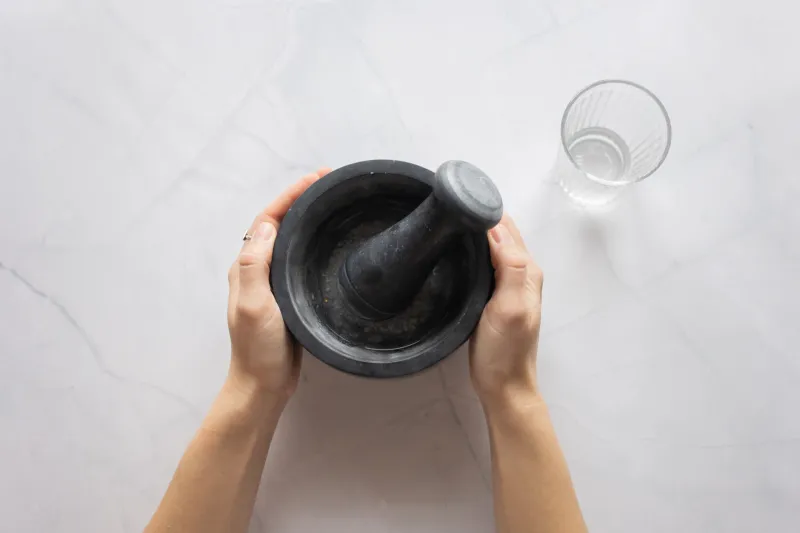
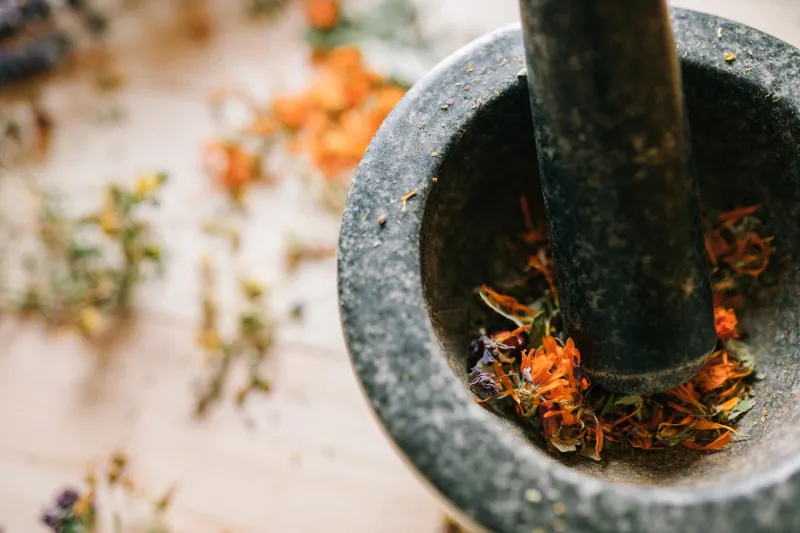
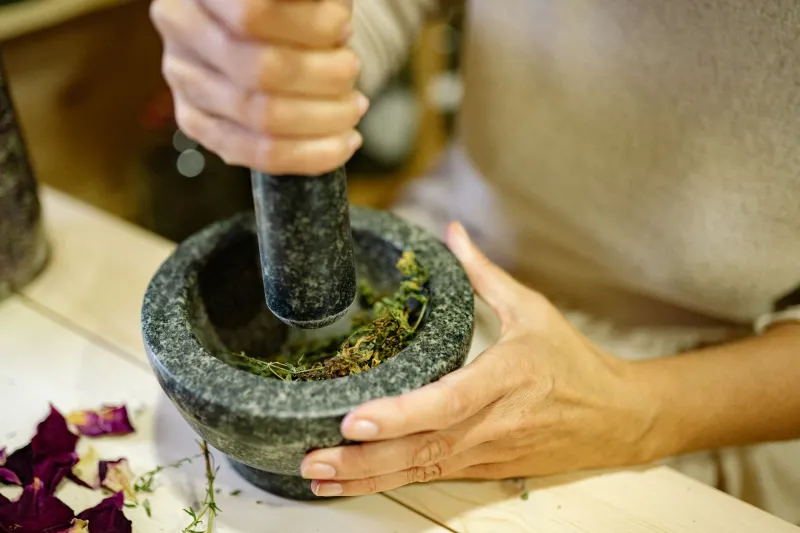
Grind your turmeric and licorice root by hand — a few minutes with a granite mortar and pestle cracks the plant cell walls and exposes the actives to the oil in a way that pre-ground, months-old powder simply can't match. Cover the powder with rosehip oil in a clean amber jar, cap it, and let it infuse on a warm windowsill for two weeks, shaking daily. Strain through cheesecloth, and you have a botanical oil serum with a production cost of roughly $12 for the whole jar — enough for months of use.
Is it identical to the department store version? No. It won't have the same silky silicone slip or the two-year shelf life. But the active botanicals — the parts doing the actual work on your skin — are fresher, and you know exactly what's in it.
The Safety Talk You Can't Skip
Now for the responsible part, because this is where enthusiasm needs to meet discipline.
Preservatives are non-negotiable for water-based formulas. Anything containing water — including aloe vera juice or hydrosols — will grow mold and bacteria, and some of those microbes are genuinely dangerous near your eyes and mouth. If you're making an oil-only infusion like the one above, water isn't in play, and that keeps things far safer. But never whip water into a homemade product and stash it in your medicine cabinet without a broad-spectrum preservative. If that sounds intimidating, stick to anhydrous (water-free) preparations: oil infusions, balms, and salves.
Patch test everything. Even natural ingredients cause reactions — turmeric and essential oils are common culprits. Apply a small amount to your inner forearm, cover it, and wait 48 hours before putting anything on your face.
Skip the actives that need real lab equipment. Niacinamide and vitamin C can be purchased as standalone serums for under $15 and layered under your homemade botanical oil. There's no shame in a hybrid routine: lab-made for the actives that demand precision, hand-made for the botanicals that reward freshness.
Use clean technique. Sanitize your jars with rubbing alcohol, wash your mortar with hot water, and let everything dry completely before use. Contamination starts with a damp spoon.
The Real Return on Twelve Dollars
Something shifts when you make your own serum. You stop treating skincare as a purchase and start treating it as a practice. You notice the turmeric stain the mortar, the way the licorice smells faintly of anise, the two weeks of anticipation while the oil turns amber.
And the next time you're at the beauty counter, you'll read that label differently — not as an incantation, but as an invoice. One that tells you exactly how much of your $180 went into the jar, and how much went into the marble countertop it's displayed on.
Your grandmother didn't have an INCI decoder. She just had a mortar, some dried roots, and good instincts. Turns out, that was most of the formula.