The Long Game: Ancient Botanical Extraction Methods That Time Actually Perfects
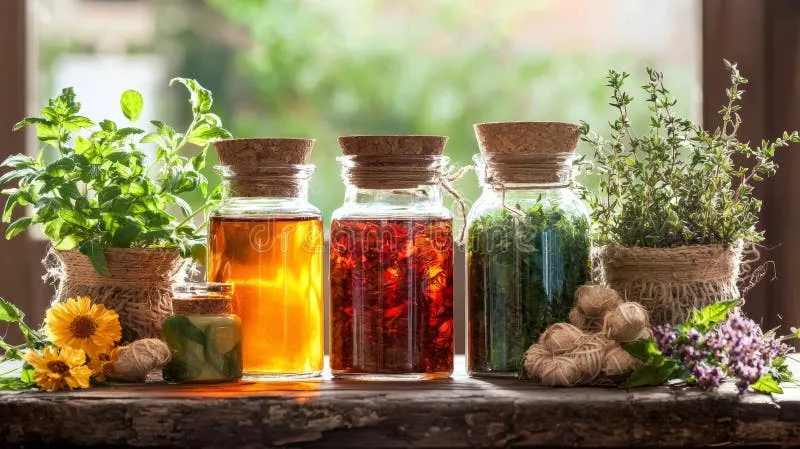
Photo: botanical herbs macerating in glass jar oil infusion rustic natural light apothecary, via thumbs.dreamstime.com
We live in a culture that's deeply suspicious of waiting. Same-day delivery. Instant results. Overnight everything. And that urgency has crept into skincare production in ways that are genuinely costing consumers—both in efficacy and in money spent chasing results that never quite land.
Here's the uncomfortable truth: some of the most bioactive botanical preparations ever used on human skin weren't made quickly. They couldn't be. The chemistry required time. And the industrial methods that replaced traditional extraction techniques didn't just change the how—they changed the what. What ends up in the jar is a fundamentally different substance.
Let's get into it.
What We Mean by Extraction (and Why It's Not All the Same)
Botanical extraction is the process of pulling active compounds out of plant material and into a usable medium—an oil, water, alcohol, or combination. Sounds simple. It isn't.
Plant cells are architecturally complex. The phytocompounds you're after—flavonoids, terpenes, alkaloids, polyphenols—are stored in different cellular compartments, bound to different carrier molecules, and released under different conditions. Temperature, time, solvent polarity, and mechanical action all determine which compounds you get, in what concentration, and in what form.
Change any of those variables and you change the extract. Not slightly. Fundamentally.
Maceration: The Method That Requires Patience
Cold maceration is one of the oldest extraction techniques on record. Plant material—dried or fresh—is submerged in a carrier oil or solvent and left to steep at room temperature for an extended period. Traditional timelines range from two weeks to three months depending on the botanical.
This slowness is not inefficiency. It's precision.
Delicate phytocompounds—particularly heat-sensitive polyphenols and certain volatile terpenes—degrade rapidly under elevated temperatures. Cold maceration preserves them. A properly cold-macerated calendula oil, for example, retains a significantly higher concentration of triterpenoid saponins and flavonoids than a heat-extracted version, even though the heat extraction takes a fraction of the time.
The 'fresh is best' myth also gets complicated here. Many botanicals actually release more bioavailable compounds after controlled drying and an extended maceration period than they do when used fresh. Cell wall breakdown during the drying process increases the surface area available for extraction. Time in the carrier medium allows for deeper compound migration. Fresh isn't always more potent. Sometimes it's just wetter.
Ancient Ayurvedic preparations called taila—medicated oils—were traditionally macerated for 30 days or longer, with specific botanicals added in sequence based on their compound release timelines. That sequencing wasn't ritual for ritual's sake. It was applied phytochemistry.
Percolation: Slow Flow, High Yield
Percolation involves allowing a solvent to slowly move through packed plant material, continuously contacting fresh botanical surface as it descends. Traditional percolators were ceramic or stone vessels designed to regulate flow rate. The slower the flow, the longer the contact time, the more complete the extraction.
Modern industrial percolation often speeds this process using pressure and heat to force faster throughput. The yield in volume goes up. The yield in phytochemical complexity goes down. Pressure extraction can rupture cellular structures in ways that release compounds in degraded or oxidized forms—functional, but diminished.
Certain adaptogens—ashwagandha, rhodiola, eleuthero—are particularly sensitive to extraction method. Their active withanolides, rosavins, and eleutherosides have different solubility profiles and respond differently to pressure versus gravity-fed percolation. A traditionally percolated ashwagandha tincture and a pressure-extracted commercial version are not the same product, even if the label says otherwise.
Decoction: Fire, Water, and Transformation
Decoction is the practice of simmering plant material—typically roots, bark, or seeds with dense cell walls—in water over low, sustained heat. This is not boiling. The distinction matters enormously.
Traditional Chinese herbal medicine has employed decoction for over 2,000 years, with specific temperature ranges and simmering durations calibrated to different botanical targets. A typical decoction might simmer for 45 minutes to an hour. Some preparations require multiple decoctions of the same material, with each pass extracting different compound classes.
Industrially, decoction is often replaced by spray-drying or high-temperature extraction under pressure—processes that reduce hours to minutes. The resulting extracts are standardized, shelf-stable, and consistent. They're also frequently stripped of the minor constituent compounds—the ones present in small amounts but critical to what herbalists call the entourage effect: the way compounds in a whole-plant preparation modulate and enhance each other's activity.
Licorice root is a useful example. Glycyrrhizin is its primary bioactive compound and the one most standardized extracts are calibrated to. But licorice root contains dozens of flavonoids—liquiritin, isoliquiritigenin, glabridin—that contribute to its anti-inflammatory and skin-brightening effects. A whole-plant decoction captures that complexity. A standardized glycyrrhizin extract does not.
The 'Weeks to Work' Reality
One of the most persistent frustrations in natural skincare is the timeline. Consumers want to see results in 28 days or less. But many botanical preparations—particularly those relying on slow-extracted or fermented ingredients—operate on longer biological timelines.
This isn't a failure of efficacy. It's a function of mechanism. Compounds that work by modulating cellular behavior, supporting barrier lipid synthesis, or rebalancing microbiome populations don't produce overnight before-and-after photos. They produce sustained, cumulative skin health. That's a harder story to tell on social media, but it's the more honest and ultimately more valuable one.
The preparation methods that take the longest to produce are often the ones that take the longest to show results—and the longest to lose them. That's not a coincidence. It's the same underlying principle: depth over speed.
What to Actually Look For
When you're evaluating a botanical skincare product, a few questions cut through the marketing:
What extraction method was used? Cold maceration, traditional percolation, and whole-plant decoction are terms worth looking for. 'Extract' alone tells you almost nothing.
Is the extract standardized or whole-plant? Standardized extracts are consistent and measurable. Whole-plant extracts are complex and synergistic. Neither is universally better, but knowing which you're getting helps set appropriate expectations.
What's the preparation timeline? A brand that can tell you their calendula oil macerated for six weeks is a brand paying attention to the details that matter.
At Pestle & Mortar Cosmetics, we take the long road because the long road leads somewhere different. The mortar and pestle on our label isn't just aesthetic shorthand. It's a commitment to the kind of preparation that industrial timelines can't replicate—and to the belief that your skin deserves the real thing, not a facsimile made in a fraction of the time.