The Intentional Pause: What Ancient Beauty Rituals Knew About Doing Less for Your Skin

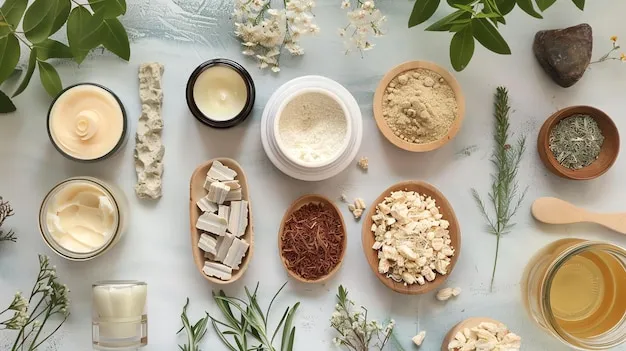
Photo: Deedee Run, CC BY 4.0, via Wikimedia Commons
Somewhere between the fifteen-step nighttime routine and the morning double cleanse, a lot of us have quietly lost the plot.
We live in an era of more — more actives, more layers, more devices, more steps. The beauty industry has done a genuinely impressive job of convincing us that skin is a problem to be constantly managed, a surface that requires relentless intervention to stay in line. But here's a thought that might feel a little radical: what if your skin is actually pretty good at its job, and what it needs most sometimes is for you to get out of the way?
This isn't a minimalism manifesto. It's something more interesting than that. It's about what happens when you look at how traditional cultures actually approached skincare — not just which ingredients they used, but the rhythm of how they used them — and then hold that up against what dermatology is learning about barrier adaptation and sensitization.
The picture that emerges is surprisingly coherent.
Rest Was Built Into the Ritual
In traditional Ayurvedic practice, skincare wasn't a daily constant — it was tied to seasonal transitions, lunar cycles, and the body's shifting internal states. Certain preparations were used intensively for a period, then set aside entirely. The skin was understood as a dynamic organ that needed time to integrate and respond, not a passive surface to be perpetually treated.
In Japan, the concept of teinei — careful, unhurried attentiveness — shaped beauty rituals that were deliberate rather than cumulative. Seasonal ingredient rotations meant that the skin got a break from certain compounds as a matter of course, not as an afterthought.
In West African traditions, shea butter preparations were often applied in cycles aligned with dry and wet seasons, with periods of minimal intervention that allowed the skin's own sebum production to recalibrate.
None of these cultures had access to transepidermal water loss measurements or patch-test protocols. But they were observant. They noticed that skin behaved differently when given space to breathe — that it became more resilient, less reactive, more capable of holding moisture on its own.
Modern dermatology is spending a lot of time and grant money arriving at the same conclusion.
The Barrier Knows What It's Doing
Your skin barrier — specifically the stratum corneum and the lipid matrix that holds it together — is not a passive wall. It's an active, adaptive system. It responds to its environment, including the skincare products you apply to it.
When you consistently apply barrier-disrupting actives — retinoids, exfoliating acids, vitamin C at high concentrations — without adequate recovery time, the barrier doesn't just get irritated. It adapts in ways that can actually reduce its long-term function. Chronic low-grade disruption can alter the skin's natural ceramide synthesis, shift the microbiome toward imbalance, and paradoxically increase sensitivity to the very ingredients you're using.
A 2021 review in the Journal of Investigative Dermatology examined the mechanisms of skin barrier adaptation and found that repeated disruption without recovery periods impaired the barrier's ability to self-repair over time. The researchers noted that strategic pauses allowed barrier lipids to replenish and the skin's natural desquamation process — the orderly shedding of dead cells — to normalize.
In plain terms: your skin has its own exfoliation system. When you constantly override it with acids, you can actually make it dependent on external exfoliation to function. The pause lets it remember how to do its job.
What Sensitization Actually Looks Like
Here's something that doesn't get talked about enough in beauty media: sensitization is cumulative and often invisible until it isn't.
You can use a product for months with zero visible reaction, while your immune cells are quietly building a response to one of its components. Then one day, you apply the same serum you've used fifty times, and your face is suddenly red and irritated. It seems to come out of nowhere. It didn't.
Dermatologists call this acquired sensitization, and it's one of the more frustrating aspects of modern skincare culture — the more products we layer, the more potential sensitizers we're exposing ourselves to, and the more frequently we're applying them.
Intentional pauses interrupt that accumulation cycle. They give your immune system's skin-resident cells a chance to downregulate, and they give you genuinely useful information: when you reintroduce products after a break, you can actually tell how your skin feels without them, and whether each product is pulling its weight.
The 72-Hour Reset in Practice
A 72-hour pause is long enough to be meaningful but short enough to feel manageable. Here's what it actually looks like.
For three days, you strip your routine back to the essentials: a gentle, non-foaming cleanser (or just water in the morning if your skin tolerates it), a simple moisturizer without actives, and SPF during the day. No retinol, no acids, no vitamin C serums, no clay masks, no enzyme treatments. Just the basics.
During those 72 hours, pay attention. Is your skin tight or comfortable? Does it feel calmer than usual, or are you noticing dryness that your actives were masking? Is there any redness that fades once the irritants are removed? The information your skin gives you during a reset is some of the most useful diagnostic data you can collect — and it costs nothing.
After the reset, reintroduce products one at a time, with a day or two between each addition. This isn't a permanent simplification (unless you want it to be). It's a recalibration.
Making the Pause Part of the Rhythm
The traditional cultures that built rest into their beauty rituals weren't doing it because they ran out of ingredients. They were doing it because they understood that the body — including the skin — operates in cycles, and that intervention has diminishing returns when it becomes constant.
You don't have to align your skincare with lunar cycles unless that genuinely appeals to you. But building in a regular reset — once a month, once a season, whenever your skin starts feeling reactive or dull — is a practice with real science behind it and centuries of cultural wisdom backing it up.
Sometimes the most sophisticated thing you can do for your skin is nothing at all. Just for a few days. Your barrier will thank you.