The Glow That Time Fermented: How Ancient Cultures Figured Out Your Skin Microbiome First
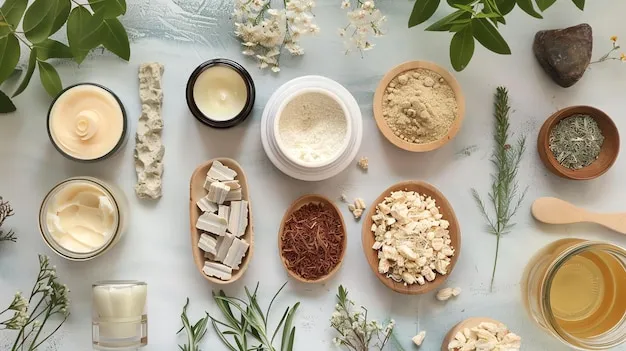
Photo: fermented botanicals herbal skincare ingredients natural beauty flatlay, via img.freepik.com
Fermentation is having a moment in American skincare, and if you've been scrolling through your favorite beauty retailer lately, you've probably noticed. Fermented serums, probiotic toners, postbiotic creams—the language is everywhere. But here's the thing: this isn't a new discovery. Cultures across the world have been fermenting their way to better skin for centuries. Science just needed a while to explain why it works.
At Pestle & Mortar, we think there's something deeply satisfying about that. The wisdom was there first. The lab just confirmed it.
A World History of Fermented Skincare (The Condensed Version)
Let's take a quick trip around the globe, because the breadth of traditional fermentation practices in skincare is genuinely remarkable.
In Korea, the fermentation tradition runs deep—and it goes well beyond kimchi. Makgeolli, a milky rice wine fermented with wild yeast and bacteria, has been used as a skin brightener for generations. The fermentation process breaks down the rice starches into smaller compounds including kojic acid, a naturally occurring brightener that modern cosmetic chemists now synthesize in labs. Korean beauty's current obsession with fermented ingredients isn't a trend—it's a continuation.
In Japan, sake brewers noticed something generations ago: their hands were remarkably smooth and youthful-looking despite physically demanding work. The culprit (or the hero, depending on how you look at it) was sake kasu—the fermented rice lees left over from brewing. Rich in amino acids, B vitamins, and ferulic acid, sake kasu has since been validated as a legitimate skin-conditioning ingredient. Brands like SK-II built empires on the fermented filtrate derived from this discovery.
In Scandinavia and Eastern Europe, whey—the liquid byproduct of cheese and yogurt making—was routinely used as a facial wash and skin treatment. Fermented milk products contain lactic acid, a naturally occurring alpha hydroxy acid (AHA) that gently exfoliates and supports skin barrier function. Cleopatra's legendary milk baths weren't just luxury—they were, by modern standards, a lactic acid treatment.
Ayurvedic tradition takes fermentation further still, with a class of preparations called arishtas and asavas—herbal decoctions fermented with natural sugars and wild yeasts for weeks or months. These weren't primarily skin treatments, but the topical application of fermented herbal preparations was part of broader Ayurvedic skin care, and the extended fermentation was understood to enhance the potency and absorbability of the herbs involved.
Why Fermentation Makes Ingredients Better for Your Skin
Here's where the ancient wisdom and modern dermatology shake hands.
Fermentation is, at its core, a process of transformation. Microorganisms—bacteria, yeast, fungi—consume and break down larger molecules into smaller ones. In food, that's what turns grape juice into wine or cabbage into kimchi. In skincare ingredients, that same process does something remarkable: it pre-digests the botanical compounds into forms that skin can actually absorb and use.
Many plant-based bioactives are bound to larger sugar molecules in their raw state—a configuration called a glycoside. Glycosides are often too large to penetrate the skin barrier effectively. Fermentation breaks those bonds, freeing the active compound and dramatically improving its bioavailability. Resveratrol, for instance—the antioxidant everyone got excited about in grapes and red wine—is more bioavailable in fermented preparations than in raw extracts for exactly this reason.
Fermentation also generates entirely new compounds that weren't present in the original ingredient. Organic acids, short-chain peptides, enzymes, postbiotics—these byproducts of microbial activity have their own documented effects on skin. Lactic acid and acetic acid gently lower skin surface pH, which supports barrier function and makes the environment less hospitable to the kinds of bacteria associated with breakouts. Certain peptides generated during fermentation have been shown to support collagen synthesis.
The Microbiome Connection
The skin microbiome—the community of bacteria, fungi, and other microorganisms that live on your skin—is one of the most exciting frontiers in dermatology right now. Research over the past decade has established that a diverse, balanced skin microbiome is closely linked to skin health outcomes: barrier integrity, reduced sensitivity, lower rates of conditions like eczema and acne.
Fermented skincare ingredients interact with the skin microbiome in ways that conventional cosmetic ingredients often don't. Postbiotics—the metabolic byproducts of fermentation—can act as prebiotics for beneficial skin bacteria, essentially feeding the good guys. Some fermented ingredients contain live or inactivated bacterial cultures that may directly contribute to microbiome diversity.
This is why dermatologists who study the microbiome are increasingly interested in fermented skincare—not as a wellness trend, but as a legitimate therapeutic approach. The traditional cultures who developed these practices didn't have the vocabulary of microbiome science, but they observed the outcomes. Skin that was calmer, clearer, and more resilient. Science is now explaining the mechanism behind what they already knew.
How to Actually Incorporate Fermented Botanicals Into Your Routine
Okay, enough history and science. Let's talk practical application.
Start with a fermented toner. This is the easiest entry point. Look for products featuring fermented rice water, sake filtrate, or fermented plant extracts as lead ingredients. Apply after cleansing on damp skin—the slightly acidic pH of most fermented toners helps prep your skin to absorb everything that comes after.
Layer a fermented serum before your moisturizer. Fermented hyaluronic acid (yes, that's a thing—fermentation is actually how most hyaluronic acid is produced commercially) or fermented botanical serums sit beautifully under cream moisturizers and can enhance the penetration of other actives you're using.
Look for postbiotic ingredients on labels. Terms like "ferment filtrate," "lysate," "postbiotic," or specifically named fermented ingredients (lactobacillus ferment, bifida ferment) signal that the product contains the bioactive byproducts of fermentation rather than just a marketing story.
Don't mix with high-concentration acids on the same evening. Fermented ingredients are generally gentle, but if you're using prescription retinoids or high-percentage AHA/BHA treatments, alternate nights rather than layering everything at once.
Old Wisdom, New Vocabulary
What strikes us most about the fermentation story is how consistent it is across cultures that had no contact with each other. Korean rice ferments, Japanese sake lees, Scandinavian whey washes, Ayurvedic herbal cultures—all of them arrived at fermentation independently, all of them observed benefits that modern science is now validating.
That's not coincidence. That's generations of careful observation, passed down and refined over time. The kind of wisdom that doesn't need a clinical trial to prove itself—though it's nice when the trials show up anyway.
At Pestle & Mortar, that's exactly the kind of knowledge we build on. Ancient methods, understood more deeply. Modern science, grounded in something real.