Hand-Ground and Skin-Ready: The Bioavailability Gap That's Quietly Reshaping Skincare Science
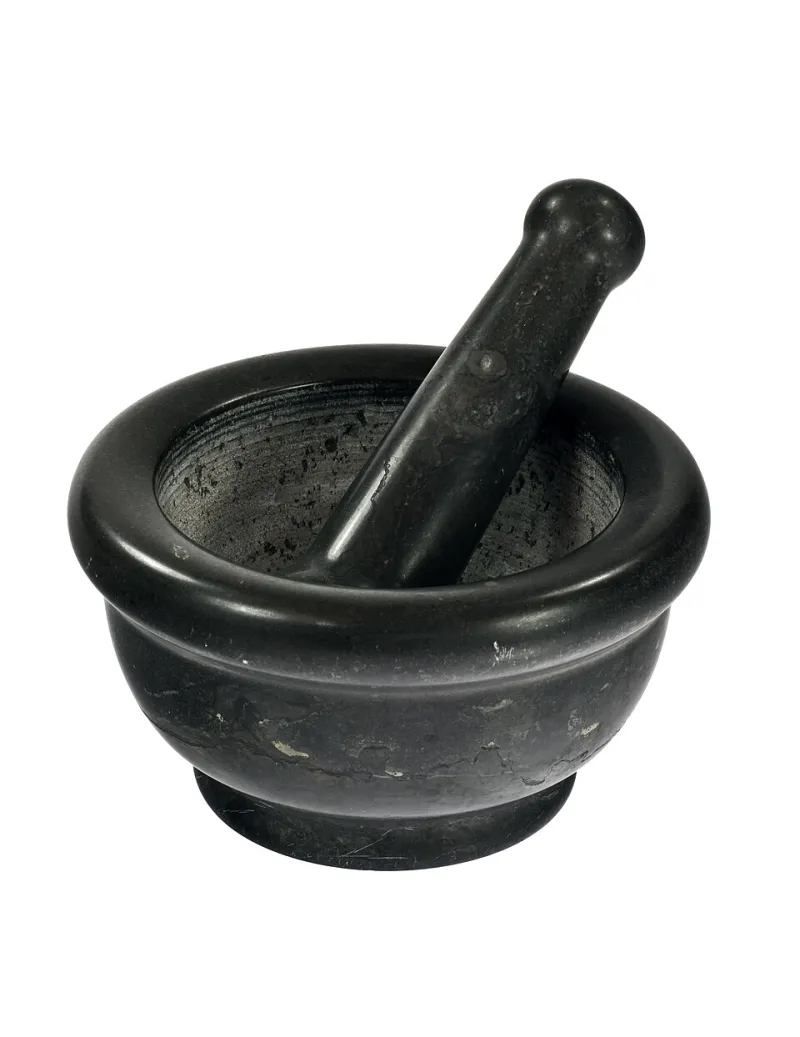
Photo: Nikodem Nijaki, CC BY-SA 3.0, via Wikimedia Commons
There's a question that keeps coming up in skincare research circles, and it's one that sounds almost too simple to be serious: does it matter how you crush something?
Turns out, it matters quite a lot.
For decades, the beauty industry has operated on the assumption that an active ingredient is an active ingredient. Extract turmeric in a lab, extract it in a stone bowl — the curcumin content is roughly the same, so the results should be too, right? That assumption is starting to crack. And the science filling that crack is genuinely fascinating.
What Bioavailability Actually Means for Your Skin
Bioavailability, in the simplest terms, is the percentage of a substance that actually reaches its target and produces an effect. In oral medicine, it measures how much of a drug gets absorbed into your bloodstream. In topical skincare, it's a bit more nuanced — it's about how much of an active compound penetrates the skin barrier, reaches the cells that need it, and does something useful when it gets there.
High bioavailability isn't automatic. A product can be loaded with actives that never make it past the stratum corneum — the outermost layer of your skin. Molecular size, polarity, the presence of carrier compounds, and the physical structure of the ingredient all influence whether something actually absorbs or just sits on the surface looking busy.
This is where the grinding method enters the picture in a way that's harder to dismiss than it used to be.
The Mechanical Difference Nobody Talked About
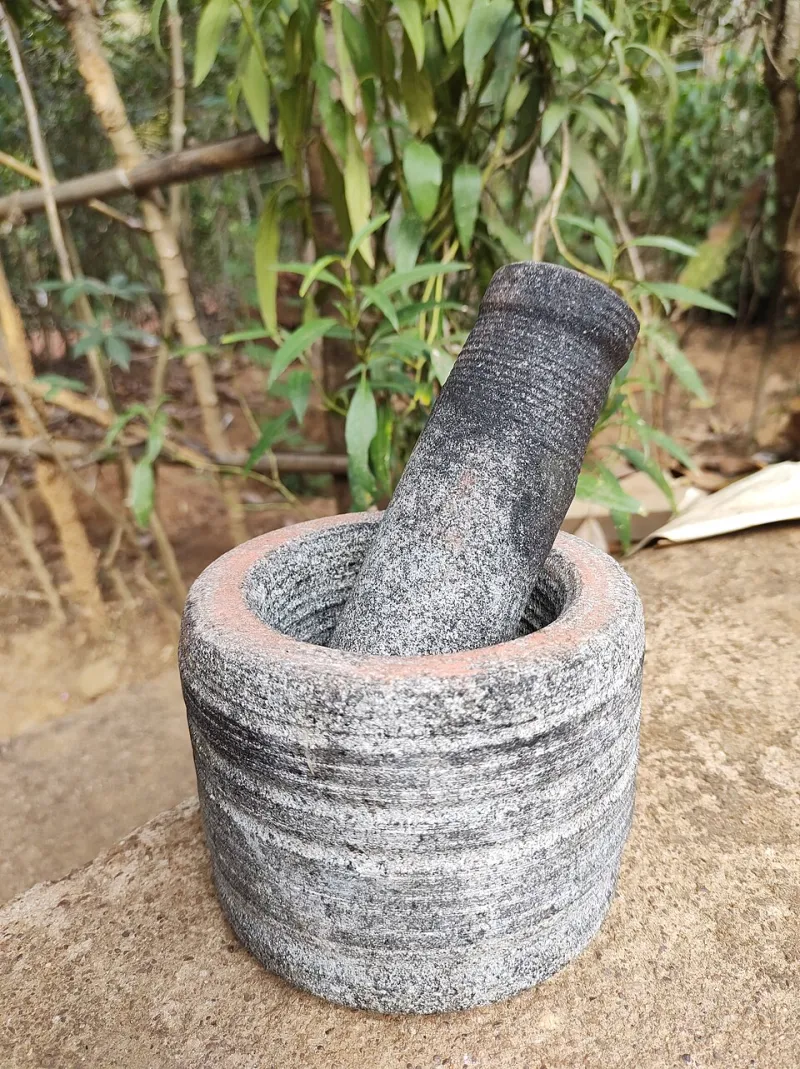
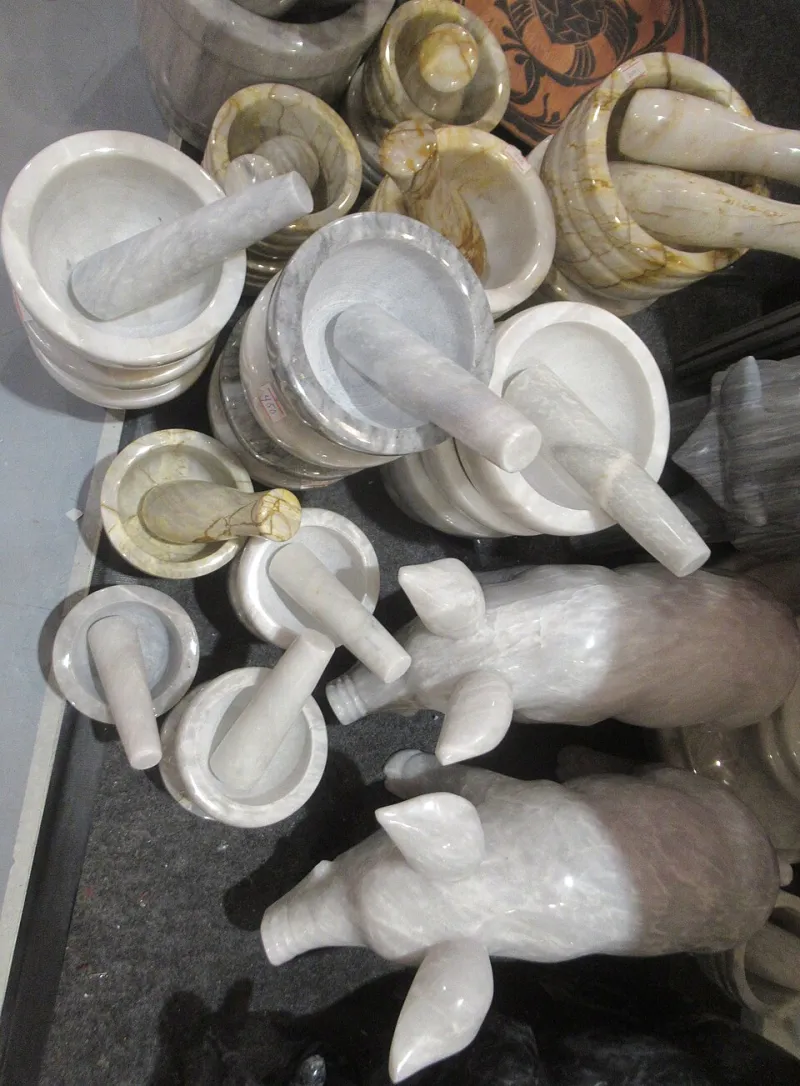
When you grind a botanical in a traditional mortar — whether it's a pestle and mortar in an Ayurvedic kitchen or a lava stone molcajete in a Mexican home — you're doing something mechanically different from what happens in an industrial blender or solvent extraction process.
The pressure applied in stone-grinding is compressive and shearing simultaneously. It doesn't just break cells open; it crushes plant structures in a way that releases compounds in close proximity to each other — compounds that, in some cases, appear to form new complexes on contact. This is sometimes called mechanochemistry, and it's a field that pharmaceutical researchers have been quietly studying for years in the context of drug delivery.
A 2019 study published in ACS Sustainable Chemistry & Engineering demonstrated that mechanochemical processing of plant materials could alter the crystalline structure of certain phytochemicals, making them more soluble and, theoretically, more absorbable. The study wasn't about skincare specifically, but the implications transferred quickly to cosmetic chemists paying attention.
When plant cell walls are ruptured through slow, compressive grinding rather than high-speed blending, the cellular fluids — including naturally occurring oils, enzymes, and co-factors — aren't just released, they're integrated. Those co-factors matter. Some plant compounds are essentially inert without the enzymatic partners that activate them, and industrial processing often separates or destroys those partners in the name of efficiency and shelf stability.
The Lipid Matrix Problem
Here's one of the more specific issues that researchers are starting to grapple with: lipid matrices.
Many botanical actives — fat-soluble vitamins, certain polyphenols, essential fatty acids — are most bioavailable when they're suspended in their native lipid environment. The plant's own oils act as natural carriers, essentially chaperoning the active compounds through the skin barrier and into deeper tissue layers.
Conventional extraction methods, particularly those using heat or solvents, can disrupt or entirely remove this lipid matrix. You end up with an isolated compound that, on paper, looks potent but, in practice, has lost its natural delivery system.
Hand-grinding whole botanicals with a small amount of carrier oil — the way traditional formulations have always been made — preserves that matrix. The active and its carrier stay together from the moment of processing to the moment of application. That's not artisanal nostalgia. That's a genuinely different biochemical reality.
Why the Lab Struggles to Catch Up
This is the part that's a little uncomfortable for conventional cosmetic science, which has spent a lot of energy trying to standardize and scale everything: the mortar and pestle is actually difficult to replicate at industrial volumes.
You can approximate the pressure. You can approximate the temperature (stone grinding stays cool, which protects heat-sensitive compounds like vitamin C derivatives and certain terpenes). But the inconsistency that traditional methods are sometimes criticized for — the slight variation batch to batch — may actually be a feature, not a bug. Biological systems respond to complexity. Skin, which is itself an incredibly complex organ, may interact more dynamically with the varied molecular landscape of a hand-processed ingredient than with a perfectly standardized isolate.
This isn't anti-science. It's the science catching up to practice. Researchers at institutions like UC Davis and the University of Massachusetts have been studying whole-food synergy in nutrition for years — the idea that the compounds in a food work better together than in isolation. Skincare is only now beginning to ask the same question seriously.
What This Means for How You Choose Products
You don't need to start grinding your own botanicals at home (though honestly, it's kind of meditative if you want to try). But it does suggest a few things worth considering when you're reading a label.
First, look for products that use whole botanical preparations rather than isolated actives wherever possible. Whole rosehip versus ascorbic acid alone. Whole turmeric preparation versus curcumin extract. The complexity is the point.
Second, pay attention to processing temperature claims. Cold-processed and stone-ground aren't just marketing language — they signal that heat-sensitive compounds were protected during formulation.
Third, consider that bioavailability isn't just about concentration. A 0.1% concentration of an active that's genuinely absorbable may outperform a 2% concentration of one that can't get past your skin barrier.
The mortar and pestle has been sitting on kitchen counters and apothecary shelves for thousands of years. It turns out, it was doing something the centrifuge still hasn't fully figured out.