What Gets Lost in Translation: The Phytochemistry Case for Stone-Ground Skincare
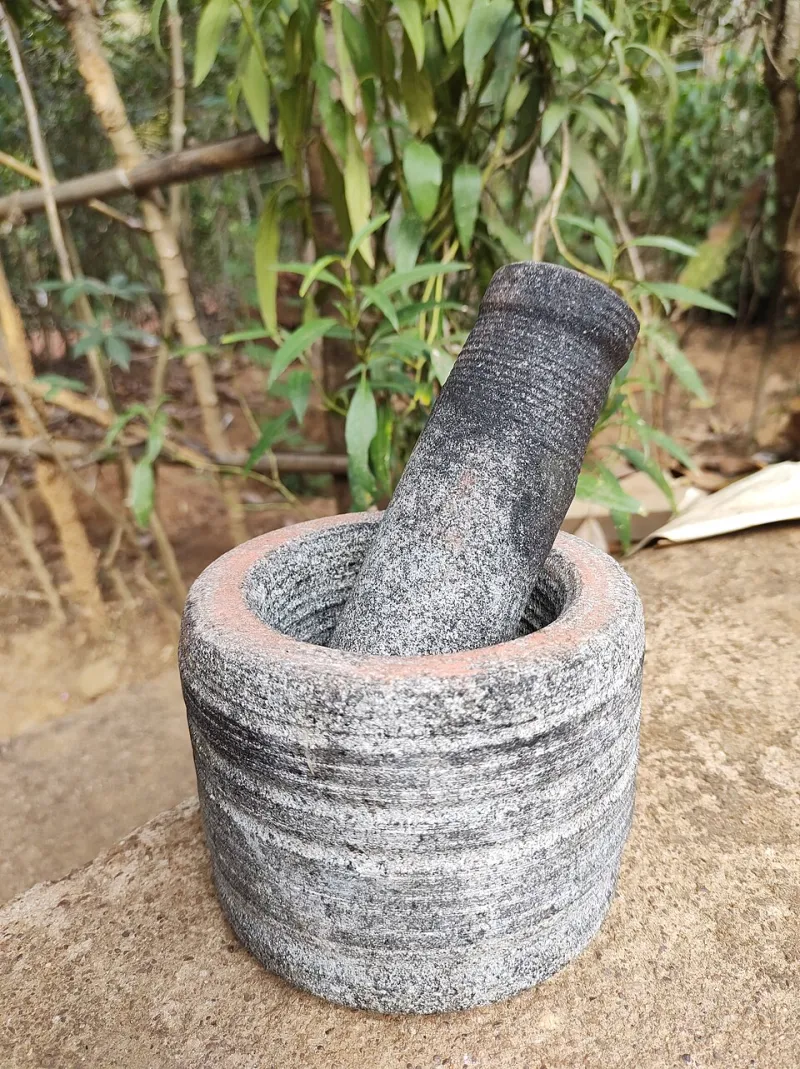
Photo: Saankav, CC BY-SA 4.0, via Wikimedia Commons
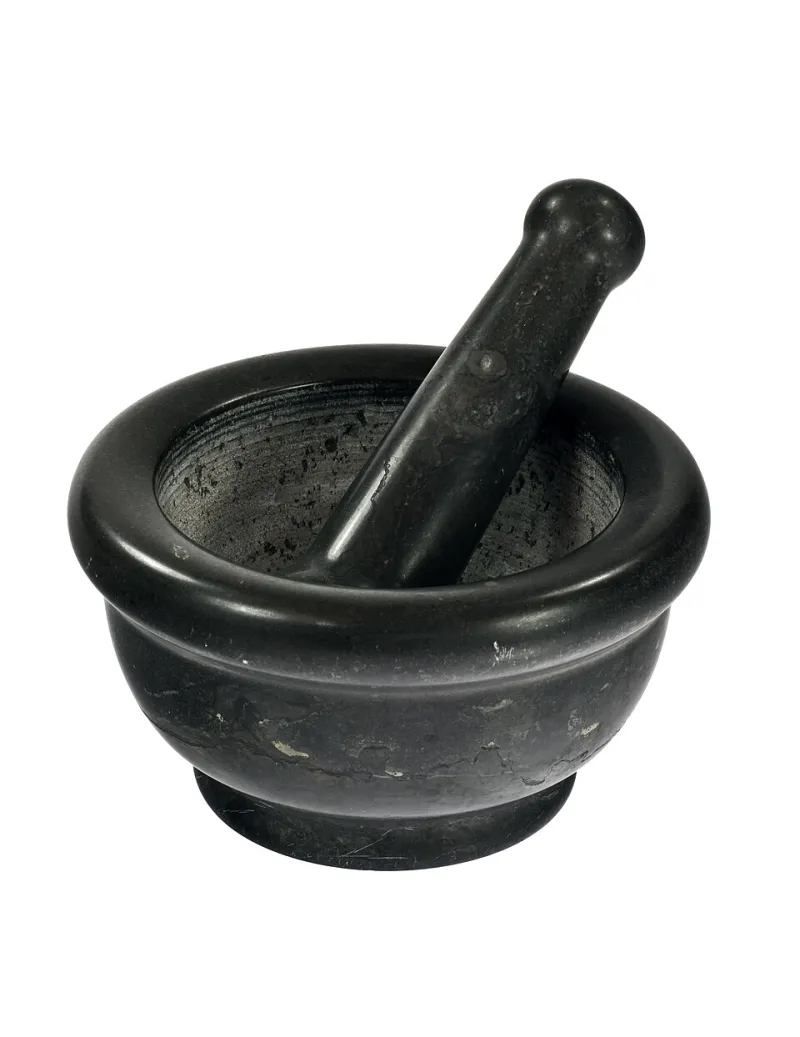
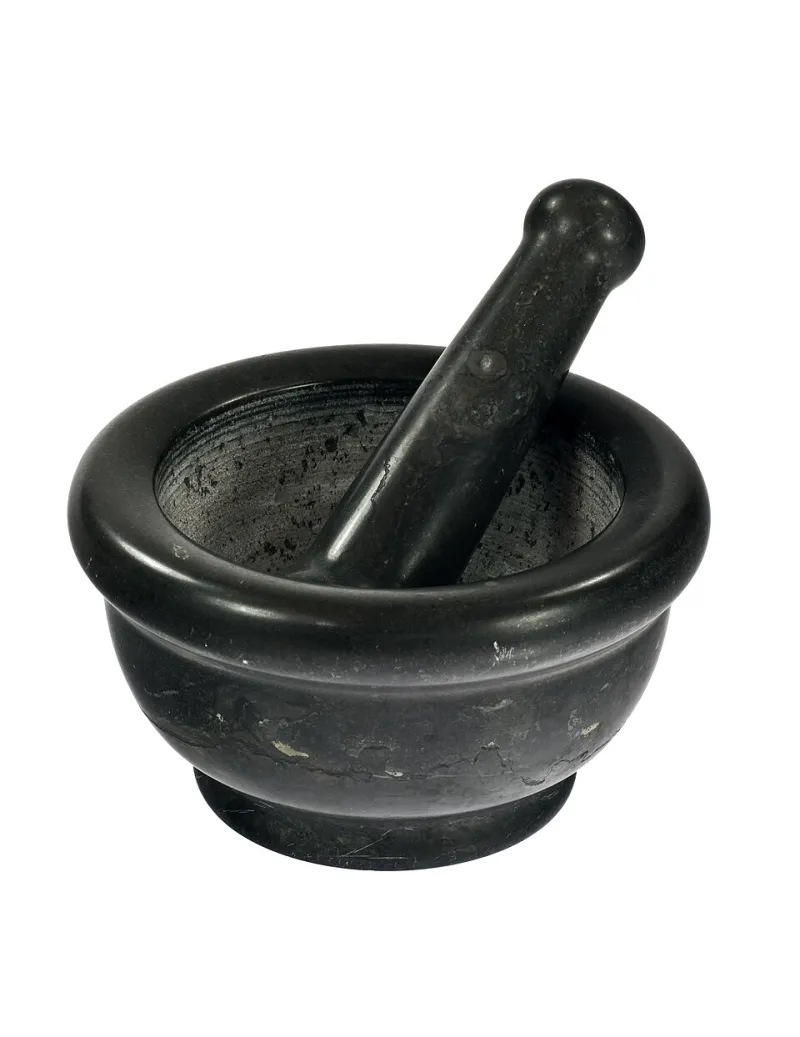
There's a reason we named our brand after the tools our grandmothers used. The pestle and mortar isn't a decorative artifact—it's a precision instrument. And the more modern cosmetic science digs into what actually happens to botanical compounds during manufacturing, the more those ancient tools are starting to look less like nostalgia and more like necessity.
Let's talk about what actually happens when you process a plant. Because the difference between a turmeric root freshly ground on granite versus one run through a high-speed industrial blade isn't just philosophical. It's molecular.
Heat Is the Enemy of Everything You're Paying For
Most commercial skincare production relies on mechanical extraction—high-speed blending, solvent pulling, or heat-assisted pressing. These methods are fast and cost-effective, but they generate friction, and friction generates heat. Even processes that don't involve direct flame can spike temperatures high enough to damage the compounds that make botanical ingredients worth using in the first place.
Polyphenols—the broad category of antioxidants found in ingredients like green tea, pomegranate, and rosehip—are notoriously heat-sensitive. A 2021 study published in Food Chemistry found that temperatures above 140°F caused measurable degradation of epigallocatechin gallate (EGCG), one of green tea's most potent antioxidants. Industrial extraction processes frequently exceed that threshold, sometimes by a significant margin.
Curcuminoids in turmeric, the flavonoids in chamomile, the ferulic acid in rice bran—all of these compounds have thermal tipping points. Push past them and you're left with an ingredient that looks the same on a label but delivers a fraction of the biological activity.
What Stone Grinding Actually Does Differently
Traditional stone-grinding—the kind that's been used in Ayurvedic preparation, East Asian apothecary practices, and Mediterranean herbalism for thousands of years—works through compression and shear rather than high-velocity impact. The slow, circular motion of stone on stone generates minimal heat while still breaking down plant cell walls effectively.
This matters because intact cell walls are actually a barrier to absorption. You need mechanical disruption to release the bioactive compounds inside. The question is how you do it. High-speed blades shatter cells violently, exposing their contents to oxygen and heat in a chaotic burst. Stone grinding releases those same compounds gradually, in a controlled environment that keeps oxidative stress—the very thing antioxidants are meant to fight—to a minimum.
Phytochemists call this the "matrix effect." The physical structure of a botanical preparation influences how its compounds behave, how stable they remain, and ultimately how bioavailable they are when applied to skin. Stone-ground preparations tend to maintain a more intact matrix, which research suggests supports better compound stability and skin penetration.
The Oxidation Problem Nobody's Talking About
Here's something that doesn't make it onto many ingredient labels: oxidation begins the moment a plant cell is ruptured. The antioxidants inside those cells are literally designed to neutralize oxidative damage—which means they can exhaust themselves during processing before they ever touch your face.
Conventional high-speed extraction creates a surge of oxidative exposure right at the moment of cellular disruption. Without careful temperature control and oxygen exclusion (processes that add significant cost and complexity), a meaningful portion of the antioxidant activity in your botanical ingredient is spent before the product is even formulated.
Slow grinding under ambient, low-heat conditions reduces that oxidative surge. The cells open more gradually, and the antioxidants they contain are exposed to less immediate stress. The result, according to emerging phytochemistry research, is a measurably higher level of retained bioactivity in the finished preparation.
What "Ancient Methods" Actually Means—And When It's Real
We'll be honest: "ancient methods" is a phrase that gets slapped on a lot of products that have no business using it. A brand can source traditional ingredients, use heritage-inspired packaging, and still run everything through a modern industrial processor. That's not ancient methods—that's ancient aesthetics.
The real test is process transparency. Does a brand disclose its processing temperatures? Does it explain how cell disruption is achieved? Does it third-party test for retained antioxidant activity rather than just raw ingredient inclusion?
When those boxes get checked, the claims hold up. A 2022 review in the Journal of Ethnopharmacology examined traditionally prepared botanical formulations across multiple cultures and found that preparations using low-mechanical-energy methods—stone grinding, hand pressing, cold maceration—consistently showed higher polyphenol retention than their industrially processed counterparts. The gap wasn't trivial. In some preparations, the difference in EGCG retention alone was over 30%.
Thirty percent more of the antioxidant you're paying for, just by changing how the ingredient was ground. That's not a small thing.
The Pestle & Mortar Philosophy, Put Simply
We didn't name this brand after a kitchen tool for the aesthetic. We named it after a process—one that respects what plants actually contain and works to keep those compounds intact from harvest to jar.
Modern skincare science is finally catching up to what traditional herbalists understood intuitively: the how of preparation is inseparable from the what of the ingredient. You can't just list turmeric or rosehip or green tea on a label and call it a day. The bioactivity of those ingredients depends entirely on how they were handled, processed, and preserved.
Slow, low-heat, stone-ground preparation isn't a marketing story. It's a measurable commitment to delivering what botanical ingredients actually promise—the full spectrum of antioxidants, phytonutrients, and bioactive compounds that make natural skincare worth choosing in the first place.
Your skin deserves the whole plant. Not what's left after the machine is done with it.