What Your Hands Know That Machines Don't: The Science of Manual Ingredient Activation
Photo: Alhassan Peter, CC BY-SA 4.0, via Wikimedia Commons
The Machine Did the Work. But Did It Do It Right?
For most of modern skincare's history, efficiency was the goal. Industrial mixers, high-speed centrifuges, and automated emulsification systems promised consistency at scale — and they delivered. But consistency and potency aren't always the same thing. A growing body of research is starting to ask a question the industry has mostly avoided: does how you process a botanical ingredient change what that ingredient actually does once it hits your skin?
The short answer, according to several cosmetic chemists and traditional formulators we spoke with, is yes. And the longer answer is a lot more interesting.
Mechanochemistry: The Reaction Nobody Talked About
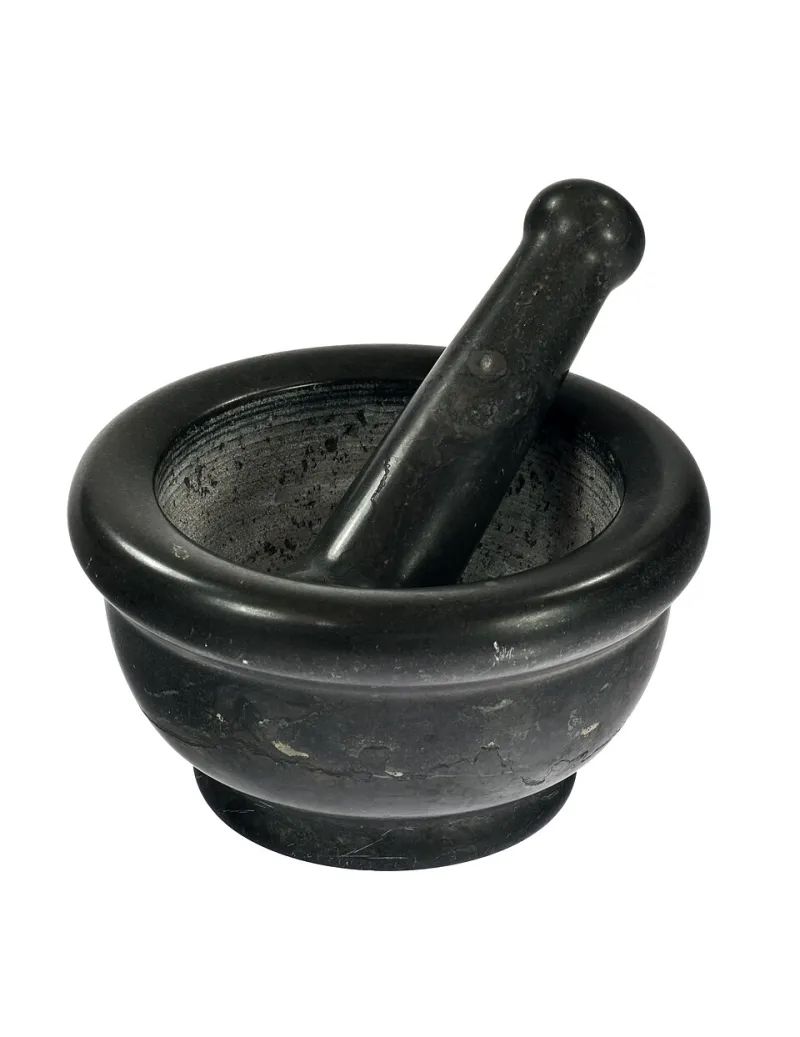
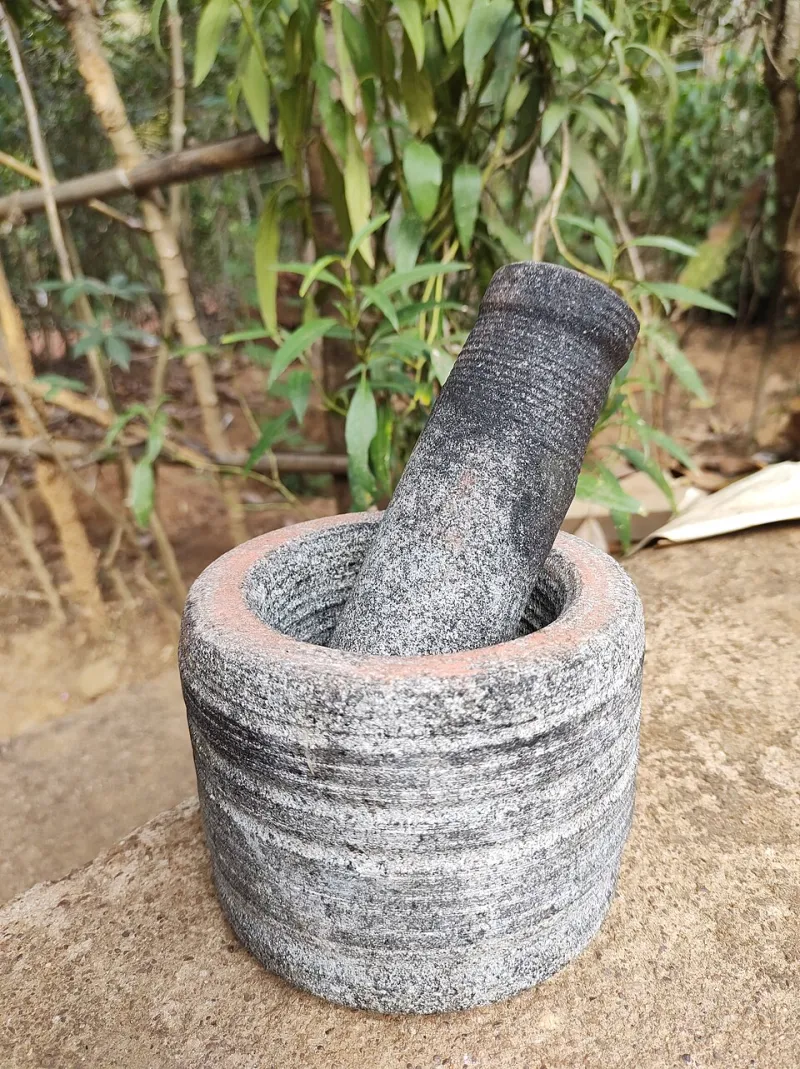
Here's a term that doesn't come up often in beauty marketing but is quietly reshaping how formulators think about ingredient prep: mechanochemistry. It refers to chemical reactions triggered by mechanical force — pressure, friction, impact. And it turns out, grinding a botanical by hand creates a very different mechanochemical environment than running it through an industrial blade system.
Dr. Lena Marsh, a cosmetic chemist based in Portland who consults for independent beauty brands, puts it plainly: "When you apply sustained, variable pressure to a plant material — the kind you get with a pestle on a mortar — you're not just breaking it down physically. You're initiating localized reactions. Cell walls rupture at different rates. Volatile compounds are released more gradually. Enzymes that were compartmentalized inside the plant tissue start interacting with other compounds they wouldn't normally touch."
Those enzyme interactions matter more than most people realize. Many of the most beneficial phytochemicals in botanicals — things like glucosinolates in mustard seed, allicin precursors in garlic, or the active phenols in turmeric — don't exist in their active form inside the plant. They're produced during processing, when enzymes meet their substrate compounds. The speed and force of that meeting determines what you actually end up with.
Industrial high-speed grinding generates heat and completes that process in seconds. Hand-grinding is slower, cooler, and more variable — and that variability, it turns out, may preserve a wider spectrum of active compounds.
What Traditional Apothecaries Already Knew
Walk into a traditional apothecary in places like Oaxaca, Marrakech, or rural Appalachia and you'll find a working knowledge of this that predates any laboratory by centuries. The tools — stone mortars, wooden mallets, ceramic grinding bowls — aren't just cultural artifacts. They're precision instruments calibrated by generations of trial and observation.
Maria Elena Vásquez, a third-generation herbalist and formulary practitioner in Santa Fe, New Mexico, has been making botanical skincare preparations for over 30 years. She describes the process the way a musician might describe playing by ear. "Every herb has a different resistance. Dried lavender breaks down fast and light. Dried rosehip needs patience — you work it in stages or you lose the oils before they can bind to anything. You feel when it's ready. A machine doesn't feel anything."
That sensory feedback loop — adjusting pressure, pace, and technique based on the ingredient's response — creates a preparation process that's inherently adaptive. Industrial systems apply uniform force to every batch. Hand preparation responds to the specific batch in front of you, which means it can account for the natural variability in botanical raw materials that machines are designed to flatten out.
The Absorption Angle: Getting More From Less
One of the more surprising findings from recent formulation research involves bioavailability — how much of an active compound your skin can actually absorb versus how much just sits on the surface. It's an area where the difference between preparation methods becomes genuinely measurable.
A 2022 study published in the Journal of Ethnopharmacology examined curcumin preparations made through traditional stone-grinding versus mechanical milling and found statistically significant differences in particle size distribution and surface area — both factors that directly affect skin absorption rates. The hand-ground preparations produced a more irregular particle profile, with smaller average particle sizes in certain compound clusters, which correlated with improved penetration in ex-vivo skin models.
Dr. Marsh references similar findings in her own client work. "We've run comparative analyses on rosehip preparations and found that cold, slow manual processing retains significantly more of the trans-retinoic acid precursors than heat-intensive industrial methods. You're getting more of the thing that actually does the work."
This isn't just about preserving delicate compounds from heat degradation — though that's real too. It's about the structural form those compounds take during processing, and whether that form is one your skin can recognize and utilize.
The Human Variable Is a Feature, Not a Bug
Modern manufacturing has spent decades treating human variability as a problem to be engineered out of the process. Batch-to-batch consistency is the gold standard in industrial cosmetics, and for good reason — consumers expect the same product every time they open a jar.
But some formulators are starting to argue that the variability inherent in hand preparation isn't a flaw to be corrected. It's information. A skilled artisan formulator adjusting their technique based on seasonal differences in a botanical harvest is doing something an automated system fundamentally cannot: responding to the ingredient as it actually is, not as it was last quarter.
Vásquez sees this as the heart of what makes traditional preparation distinct. "The plant changes with the season, with the soil, with the weather. If your process never changes, you're not really working with the plant anymore. You're working around it."
This philosophy is increasingly resonating with a segment of the skincare market that has grown skeptical of the promise that standardization equals quality. For many consumers — particularly those who've grown up watching small-batch food and craft beverage culture reclaim territory from industrial production — the idea that a human hand in the formulation process might actually produce a better result isn't a hard sell.
Where Science and Craft Are Finally Meeting
What's changed in recent years isn't the traditional practice — that's been consistent for generations. What's changed is the scientific vocabulary to describe why it works. Mechanochemistry, bioavailability metrics, phytochemical stability analysis — these are tools that let researchers examine artisanal preparation methods with the same rigor applied to industrial ones. And increasingly, the results are validating what practitioners like Vásquez have observed empirically for decades.
That convergence is exactly where the most interesting skincare innovation is happening right now. Not in the race to synthesize more potent compounds in a lab, but in the slower, more careful work of understanding what happens when you take a stone, a plant, and a little time — and actually pay attention.
The pestle and mortar isn't a nostalgic prop. It turns out it might be one of the most sophisticated processing tools we've ever had. We just needed the science to catch up before we could say so out loud.