Rice Water, Honey, and the $400 placebo: What Your Grandmother Knew About Skincare Value
There's a particular kind of sticker shock that hits when you're standing at a beauty counter, holding a small jar of fermented rice essence priced at $210, and you remember that your grandmother used to soak rice in water on her kitchen counter in Ohio and splash the leftover liquid on her face. Same ingredient. Same basic chemistry. Very different price tag.
It's easy to dismiss that comparison as naive — surely the $210 version has something the kitchen version doesn't? Sometimes yes. But often, according to the cosmetic chemists we spoke with, the answer is more uncomfortable for the luxury industry than you'd expect.
The Rice Water Receipt
Rice water has been a skincare staple across parts of Asia for centuries — Yao women in Huangluo, China, are famous for using fermented rice water on hair and skin. The active players are real: inositol, ferulic acid, trace B vitamins, and starches that leave a soft, temporary film on skin.
Here's the thing. "Ferulic acid is ferulic acid," as one formulator we interviewed put it. "If a luxury essence contains rice ferment at 2% and you make a proper rice water soak at home, you're getting comparable actives. What you're paying extra for is fragrance, packaging, and a marketing team."
Home cost: roughly 40 cents per batch using pantry rice. Luxury equivalent: $150–$280 per bottle, on average.
Turmeric: Where Tradition Genuinely Wins
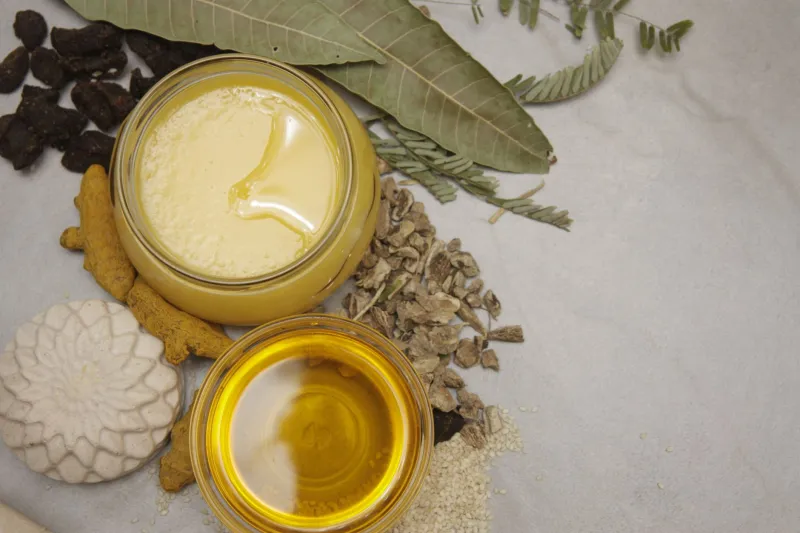
Turmeric pastes — often mixed with honey or yogurt in traditional preparations across South Asia — are backed by a genuinely impressive body of research on curcumin, the compound responsible for turmeric's golden hue and its anti-inflammatory reputation.
Here tradition actually has an edge over some luxury products. Many high-end "brightening" creams include token amounts of turmeric extract for label appeal. A fresh-ground paste, by contrast, delivers the whole rhizome — curcuminoids, essential oils, and all. The catch: fresh turmeric can temporarily stain skin, and it should always be patch-tested. But at under a dollar per treatment, it's hard to argue with the value.
Honey Salves: The Original Humectant
Medical-grade honey is used in clinical wound care — that's how well-documented its antibacterial and humectant properties are. A simple salve of raw honey (ideally locally sourced) and a carrier oil costs a few dollars and outperforms many $200 moisturizers on pure hydration mechanics: honey is a natural humectant that draws water into skin.
Where luxury wins: stability, preservation, and elegant texture. Raw honey formulas can ferment or spoil without proper handling. That's a real trade-off, not a small one.
Your Cost-Breakdown Cheat Sheet
Run the math yourself before your next splurge:
| Traditional Remedy | Home Cost Per Use | Luxury Counterpart | Cost Per Use |
|---|---|---|---|
| Rice water rinse | ~$0.05 | Fermented rice essence | $4.00–$8.00 |
| Turmeric + honey paste | ~$0.75 | Brightening turmeric cream | $6.00–$12.00 |
| Raw honey salve | ~$0.30 | Ceramide repair cream | $5.00–$10.00 |
Multiply those differences across a year and you're looking at hundreds of dollars — enough to fund a dermatologist visit, which will do more for your skin than most jars ever will.
Where the Hype Lives
To be fair to the luxury side: not everything is markup. Well-formulated modern creams solve problems kitchen remedies can't — stable retinoids, correctly buffered exfoliating acids, preservative systems that keep formulas safe for months. The chemists we spoke with were unanimous on one point: tradition wins on simple, single-ingredient hydration and antioxidant basics. Science wins on actives that require precise pH, concentration, and stability.
The smartest routine isn't ancient or modern. It's both — honey from the farmers market on Sunday, a properly formulated retinoid at night. Your grandmother would approve of half of that. Your dermatologist would approve of the other half.